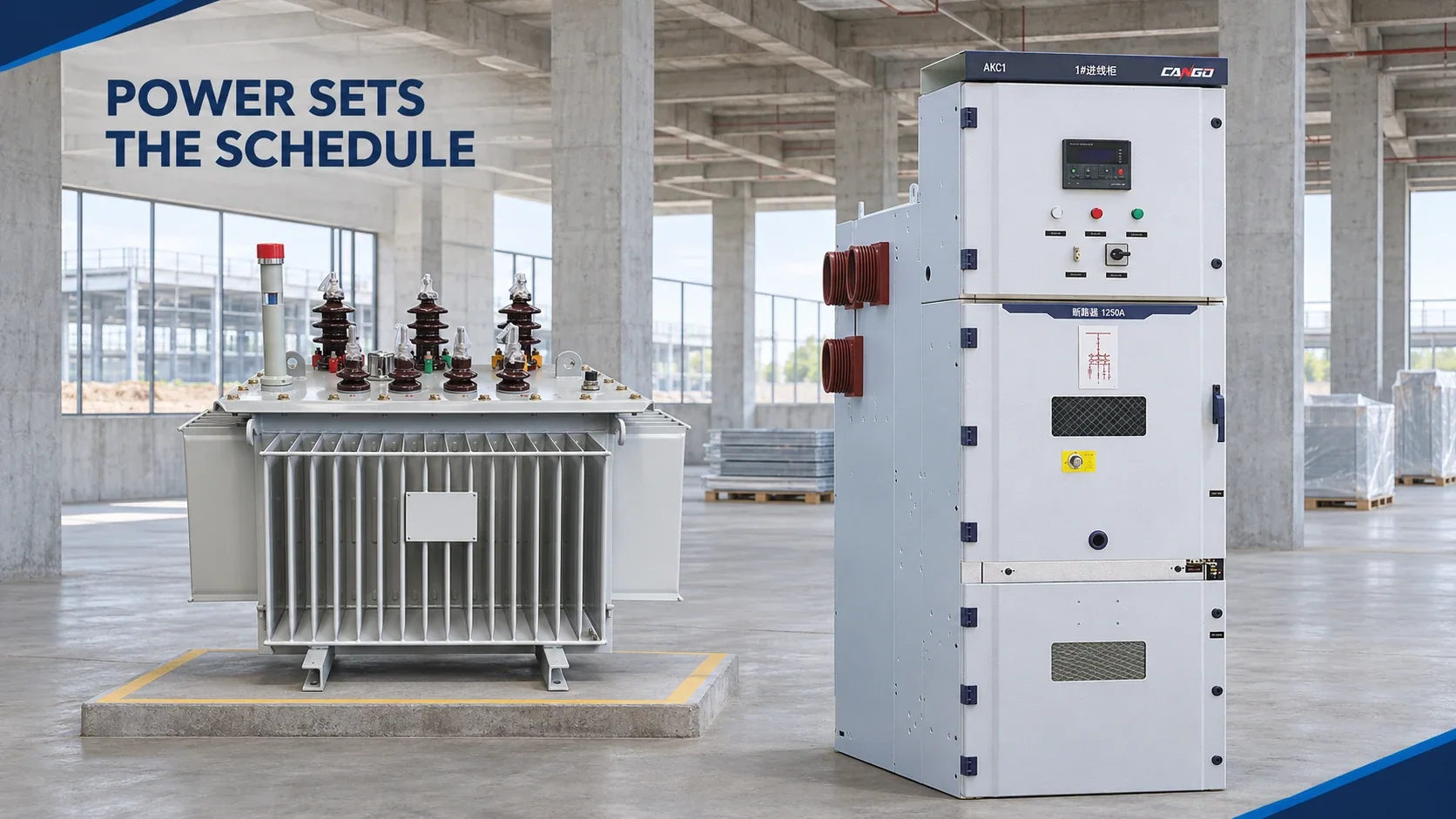
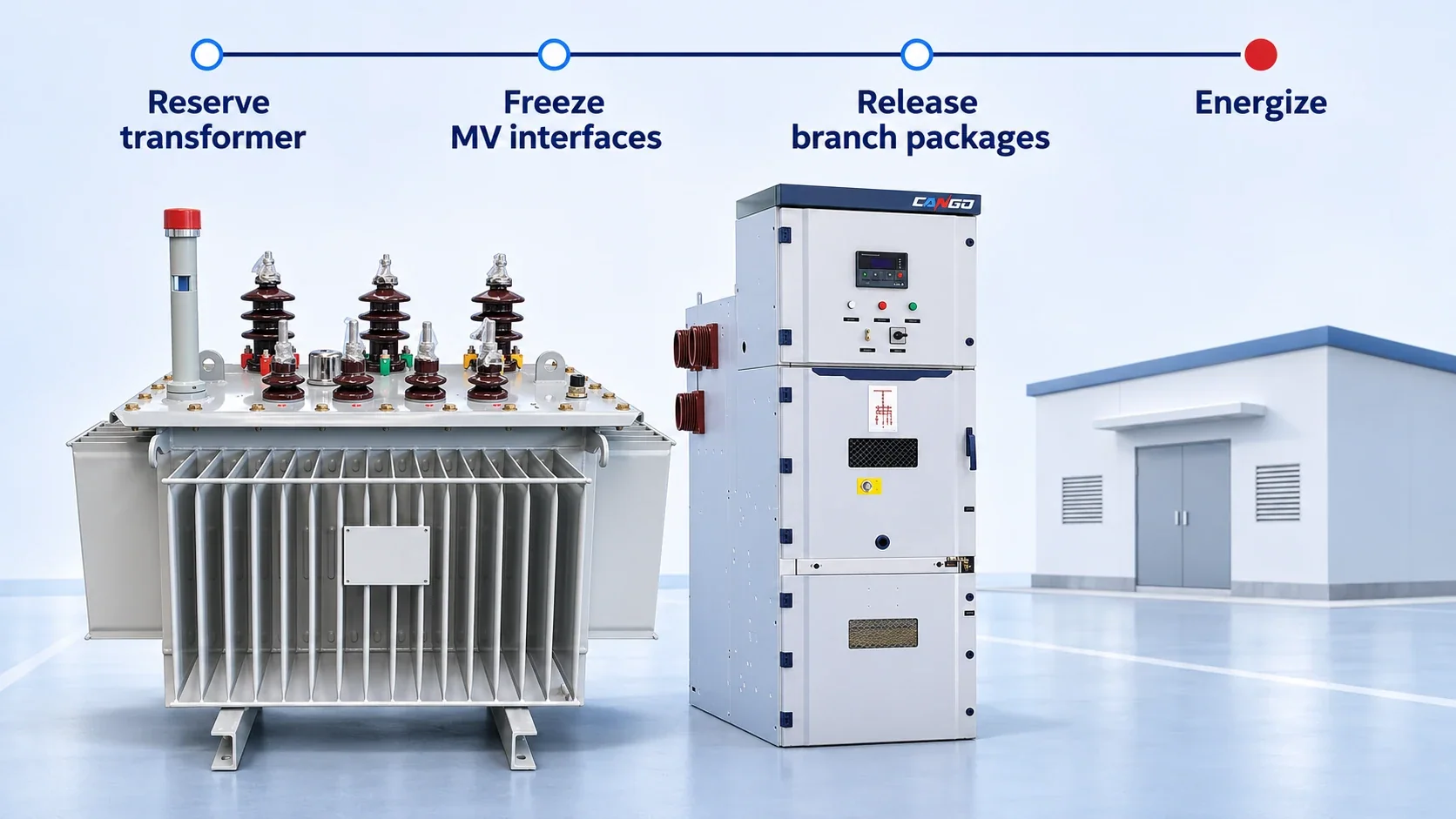
Short Answer: Terrapin’s June 2026 procurement data, reported by IndustrialSage on September 1, puts 15 kV-class MV switchgear at 52-80 weeks; large power transformers can take longer. Work backward from energization: secure the longest-lead transformer first, reserve MV gear alongside it, then release RMU and low-voltage packages against their confirmed schedules. A delayed second utility feed can be staged if the initial supply, temporary support and isolated future interfaces are engineered in advance. Emerging 800 VDC changes downstream power conversion and rack distribution; it does not remove the campus’s incoming MV AC requirements.
1. Why data center MV gear is on a different clock now
For a procurement team, a completed shell is not a power milestone. Incoming transformers, switchgear and utility service must converge before the first hall can be energized. Buying electrical equipment when construction reaches its installation point puts the longest manufacturing queues after the building work instead of alongside it.
Market snapshot – as of November 2026
| Evidence group | Reported figures and scope | Source | Date |
|---|---|---|---|
| Schneider Electric | Q3 revenue €11.46 billion; data-center demand grew at a triple-digit rate. Management identified triple-digit orders in three of the last four quarters. The 30% exposure shown in its presentation is FY2025 Data Center & Networks orders, not Q3 2026 pure-data-center share. | Official Q3 release, presentation and call transcript [1] | October 16, 2026 |
| ABB | Group orders $12.055 billion, up 40%; US orders up 82%; data-center orders grew at a triple-digit rate. Electrification orders rose 70% to approximately $7.67 billion. Group backlog approximately $32.3 billion; group book-to-bill 1.24. The 40% increase is group-wide. | Official Q3 interim report [2] | October 20, 2026 |
| Equipment prices | Circuit breakers up 47%; MV switchgear up 50%, January 2021-March 2025. These are historical market changes, not quoted project prices. | Wood Mackenzie summary, price chart; reported by POWER [3] | Summary September 2025; POWER January 2, 2026 |
These figures are demand-side context, not CANGO delivery commitments. Financial results become dated; the lasting subject here is procurement method, with these numbers retained only as a November 2026 snapshot.
The practical response is to make the electrical release schedule part of preconstruction. Assign ownership of utility information, approved drawings, factory reservations and later expansion interfaces before those decisions become dependencies for an occupied hall.
2. The lead-time table: what actually takes how long
Keep the equipment population attached to every figure. The following are US-market observations from different periods and methods, not interchangeable quotations for an IEC lineup or CANGO transformer. A GSU serves generation; it is not the default incoming step-down transformer for a data center.
| Equipment | Voltage class / specification | Lead time (weeks) | Source | Date of source |
|---|---|---|---|---|
| Large power transformer | Power-transformer category; voltage not stated | 128 average | Wood Mackenzie Q2 2025 benchmark via POWER [3] | Survey Q2 2025; report January 2, 2026 |
| Generator step-up transformer | GSU category; voltage not stated | 144 average as reported | Wood Mackenzie Q2 2025 benchmark via POWER [3] | Survey Q2 2025; report January 2, 2026 |
| Generator step-up transformer | GSU category; voltage not stated | About 143 average | Wood Mackenzie original summary [3] | Survey Q2 2025; summary September 2025 |
| Generator step-up transformer | GSU category; voltage not stated | More than 160 | Wood Mackenzie analyst via Reuters [4] | Observation Q1 2026; report July 9, 2026 |
| MV switchgear | 15 kV class, reported procurement band | 52-80 | Terrapin procurement data via IndustrialSage [5] | Data June 2026; report September 1, 2026 |
| MV switchgear | 38 kV class | 78-104 | Terrapin procurement data via IndustrialSage [5] | Data June 2026; report September 1, 2026 |
| Switchgear benchmark | Voltage/construction not separated in the published chart | About 44 average | Wood Mackenzie original summary and POWER [3] | Survey Q2 2025; POWER January 2, 2026 |
| MV switchgear | Voltage class not specified in the cited report | 38-63 | Cushman & Wakefield guide via CRE Daily [6] | Guide 2026; report August 27, 2026 |
| Pad-mounted transformer | Voltage/capacity not specified in the cited report | 68-113 | Cushman & Wakefield guide via CRE Daily [6] | Guide 2026; report August 27, 2026 |
| Generator | Rating/fuel not specified in the cited report | 60-100 | Cushman & Wakefield guide via CRE Daily [6] | Guide 2026; report August 27, 2026 |
The GSU readings are kept separate because POWER reports 144 while the original summary describes approximately 143. Likewise, the switchgear figures must not be averaged. Voltage class and construction differ; manufacturer-order benchmarking differs from a contractor’s active procurement and slot-reservation experience; the observation dates differ. The approximately 44-week aggregate is not a verified 15 kV-class promise. Terrapin’s current report also separates constructions more finely, so retain the date and scope of IndustrialSage’s June-data summary.
Use these numbers to count backward from the required power-on date, not to compare prices. This article does not adopt generic claims of an entire MV lineup arriving in 8-12 weeks: require documented scope, available equipment and factory confirmation before changing the market-based plan. A verified project-specific exception still needs its own evidence.
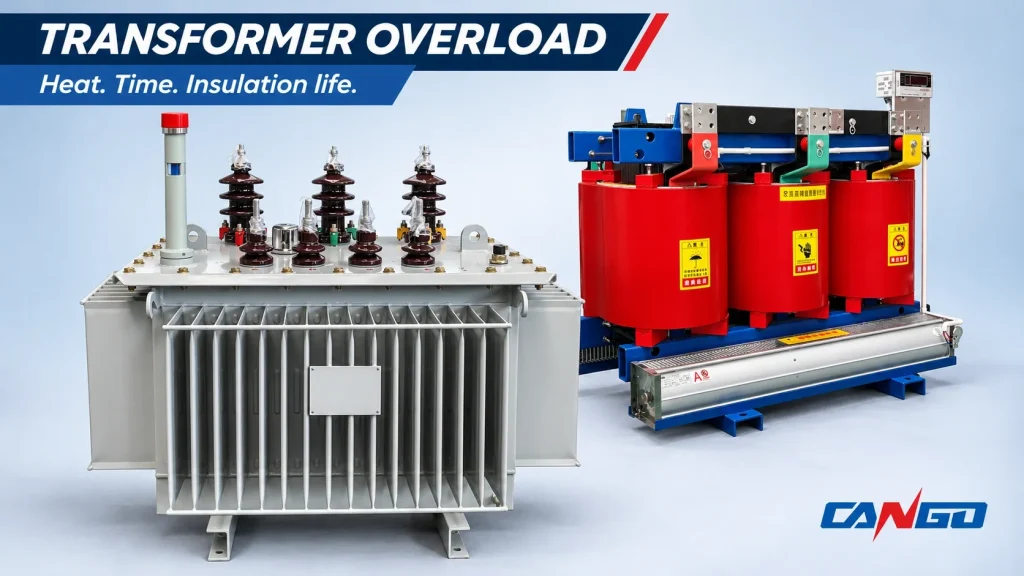
An existing transformer is not automatically a bridge across a supply delay. If capacity is already constrained, use the transformer overload decision checklist before treating temporary excess load as an alternative to expansion.
3. Order by lead time, not by construction sequence
Commit the transformer package first
Identify which transformer actually gates energization: the utility-owned incoming unit, the campus power transformer or a distribution package. Reserve the longest applicable item first. Do not apply the GSU figures to every transformer, or assume that a small distribution unit inherits the large-power benchmark.
Put the contractual starting point on the schedule. A lead time measured after order receipt differs from one beginning after drawing approval or deposit. Agree who owns utility coordination, transport access, storage and readiness for delivery. A factory date alone does not establish the site’s energization date.
Reserve the MV lineup alongside transformer engineering
The reported 15 kV band is 52-80 weeks, with 38 kV longer. Release their interfaces together: voltage, transformer arrangement, incoming and outgoing circuits, protection functions and the future feed boundary. Ordering a cabinet before resolving those interfaces can create a manufactured lineup that does not match the approved system.
RMU and low-voltage packages follow their own confirmed lead times. “Subsequent” does not mean waiting for the MV equipment to arrive. If a particular downstream package becomes the longest dependency, promote it in the procurement schedule rather than following a fixed equipment hierarchy mechanically.
Use an LOI to reserve a slot, with explicit hold points
A letter of intent can request a factory position before every detail is complete, but only the supplier’s written agreement establishes what is reserved. State the assumed configuration, reservation expiry, commercial exposure, information deadlines and the point beyond which changes require repricing or rescheduling. An LOI is not approval to manufacture from unresolved ratings.
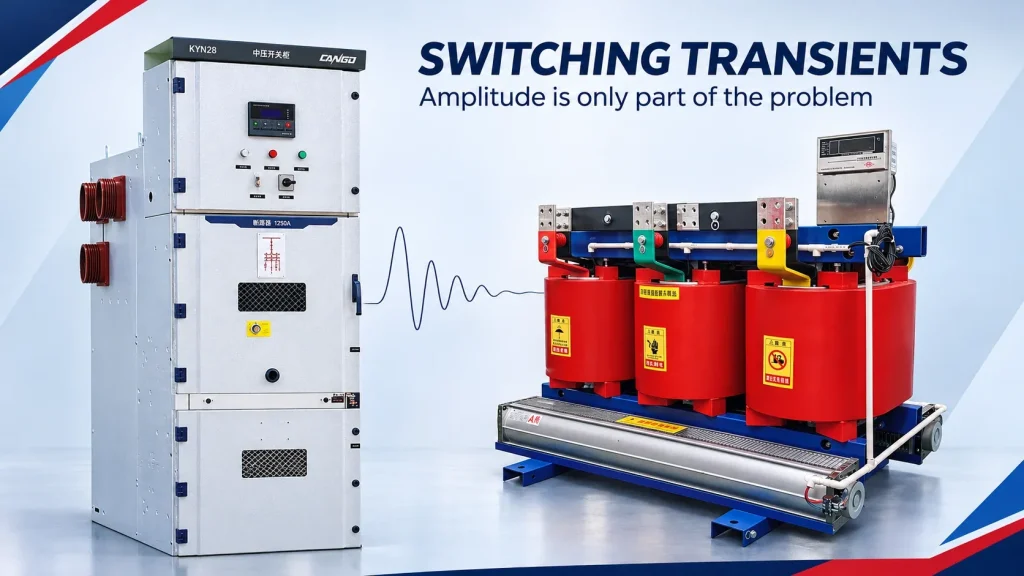
Use the MV single-line diagram guide to organize the release drawing. Freeze the essential topology before fabrication; mark the future B feed, normal tie state and temporary-source boundary explicitly. A later bus, breaker or protection change can invalidate drawings, components and test arrangements, potentially resetting the slot. Require a revised delivery commitment with every material change.
Prefer an established configuration
Ask what the factory already builds with available components and approved drawings. Standardization can remove engineering iterations, but it does not waive the site’s required ratings or utility acceptance. Track deviations in one controlled list instead of allowing separate consultants to change the package independently.
Use the MV switchgear quotation checklist to gather the inquiry inputs. Obtain one dated response that distinguishes reservation, drawing approval, manufacturing release, testing, shipment and delivery.
| Equipment | Procurement-only offset before energization at T-0 | Basis from Section 2 |
|---|---|---|
| Large power transformer | Benchmark T-128 weeks; confirm actual package | Wood Mackenzie/POWER, Q2 2025 |
| MV switchgear, 15 kV class | T-80 to T-52 weeks | Terrapin June 2026 via IndustrialSage |
| MV switchgear, 38 kV class | T-104 to T-78 weeks | Same source |
| MV switchgear, unspecified class | T-63 to T-38 weeks; use only after matching scope | Cushman & Wakefield 2026 via CRE Daily |
| Pad-mounted transformer | T-113 to T-68 weeks | Same guide/report |
| Generator | T-100 to T-60 weeks | Same guide/report |
| RMU and low-voltage packages | Factory-confirmed offset; no verified band assigned here | Project-specific procurement response |
These are lead-time offsets, not complete latest-order dates. Add project-approved allowance for activities outside the quoted boundary, including approvals, shipping, installation and commissioning. Do not double-count activities already included, and do not invent a universal buffer. Where only one published average exists, obtain a project range before committing the master schedule.
4. Staging the second feed without an outage
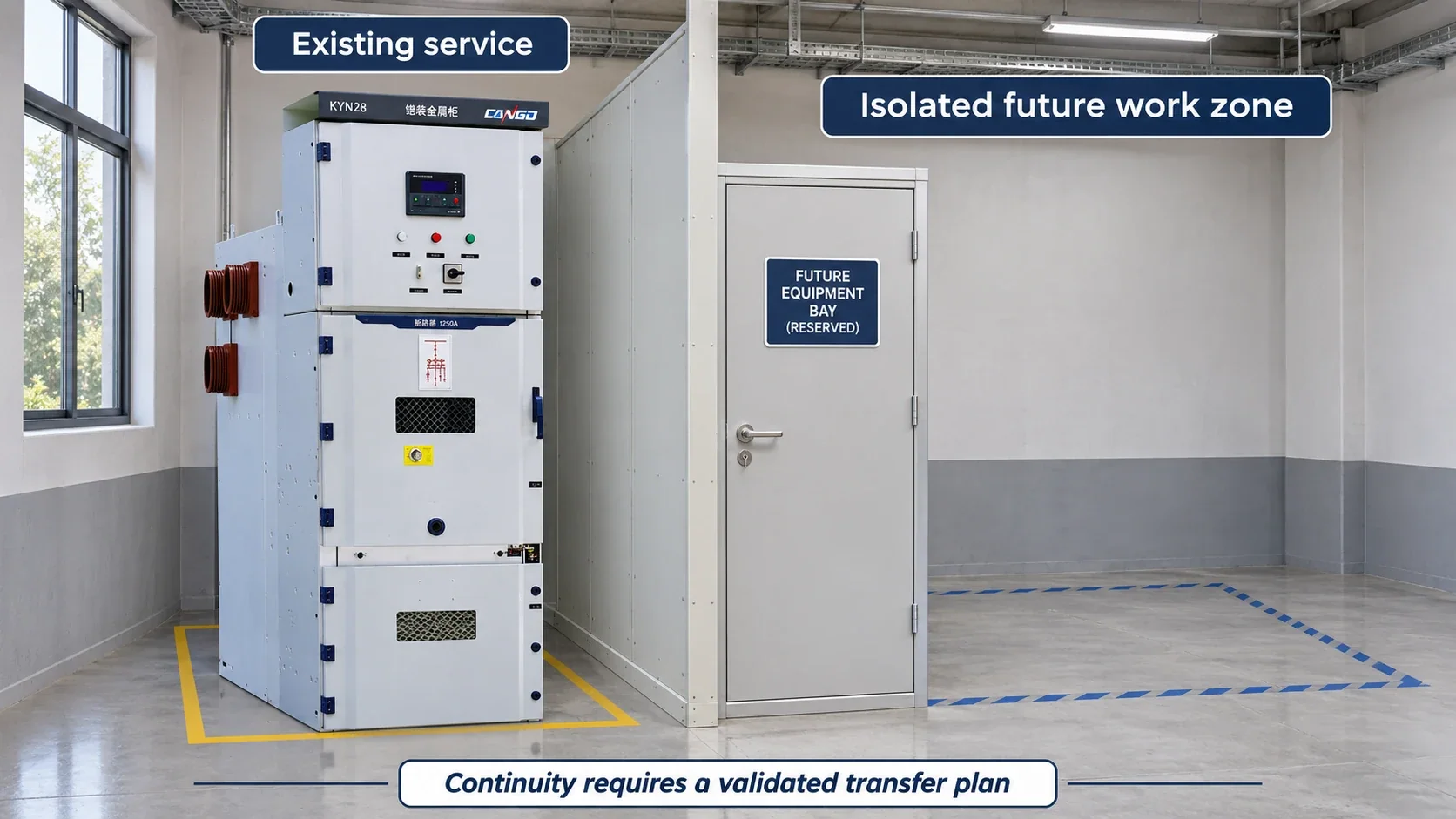
Consider an initial utility feed becoming available before the second. The first-phase supply must carry an agreed load while construction and commissioning of the future interface remain possible. Treat the temporary arrangement as a separate operating configuration, with its own capacity assessment, protection and acceptance plan.
Uninterrupted IT service is an engineered outcome, not permission to splice cables or extend busbars while energized. Where the lineup cannot provide the necessary isolation, arrange an electrical outage and support the critical load through an approved alternative. Plan these gates before ordering:
- Prove initial capacity. Check the available A feed and temporary support against first-phase demand and the accepted contingency. If they cannot support it, reduce initial load or stage rack deployment. Do not count an unapproved transformer overload as reserve.
- Define temporary supply and protection. Specify the source, earthing, isolation, interlocking and protection review for that operating state. A load-break elbow may be operated under load only within its actual ratings, compatible interface and manufacturer’s procedure; it is not generic permission to interrupt fault current or make an improvised transfer.
- Prepare B before switching to it. Provide reserved bays and manufacturer-approved interfaces from the outset. Install and connect only in an isolated, proved-dead work zone, complete the required tests, then execute the approved transfer and verify coordination. Mechanical lineup extension that needs access to live common bus requires an outage; “join first” never means live bus assembly.
- Validate continuity. Establish the UPS ride-through window and available backup against the entire transition and recovery sequence. The approved switching state table must define incoming and bus-tie breaker states, permissives and failure responses. Do not improvise source paralleling; utility approval and the designed synchronization/protection are prerequisites where paralleling is proposed.
- Accept both stages. Include staged-mode logic and blocked unsafe states in FAT. At SAT, confirm phasing, the isolated B interface, revised settings, actual transfer performance and rollback behavior before releasing the new state. Test the specific staged arrangement rather than substituting a generic factory checklist.
Record the point where the project moves from temporary to permanent configuration. Update drawings, operating instructions and protection files so the control room does not retain contradictory versions of the system.
5. What to specify so your lineup doesn’t go to the back of the queue
- Voltage class: establish the utility interface first. CANGO’s KYN28-12 and KYN28-24 provide 12 kV and 24 kV equipment options; KYN61-40.5 addresses a higher 40.5 kV class. These are equipment classes, not a claim that every campus uses those supply voltages or that US 15/38 kV specifications are interchangeable. Higher voltage is not automatically better. The utility-distribution application article covers the related network context.
- Fault duty: use the utility’s final short-circuit information and the approved site study before releasing ratings for manufacture. Reserve a slot with an explicit hold if those inputs are pending; do not convert a preliminary estimate into an unconditional build instruction. Changed fault duty can require redesigned equipment.
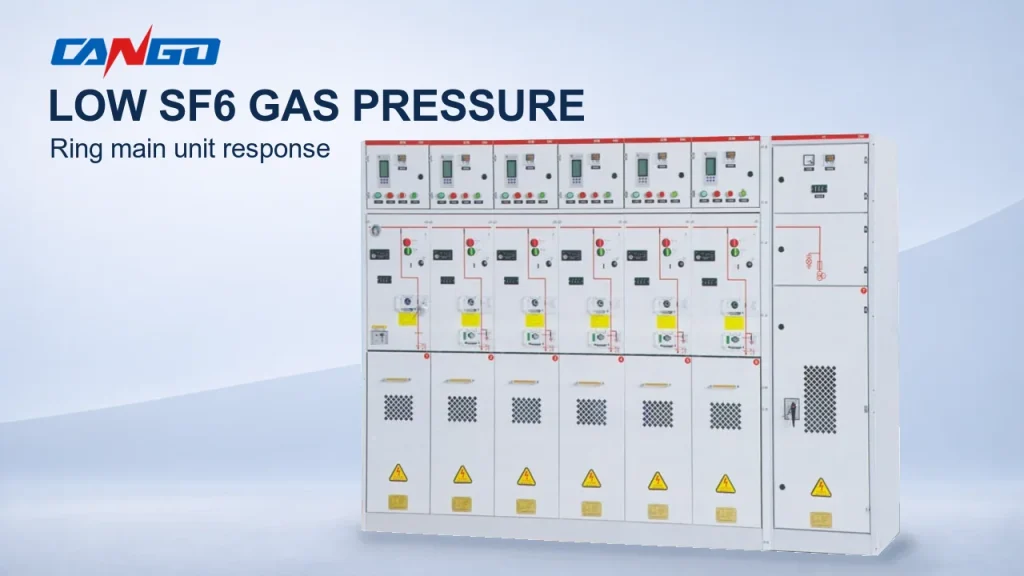
- Lineup and branch roles: use the metal-clad withdrawable KYN28 arrangement where the main distribution design requires it, and the configured SRM-12 or GTXGN-12 RMU for suitable ring/branch duties. See RMU vs switchgear for their distinct roles. Breaker-media selection belongs in vacuum vs SF6 circuit breakers. Verify the selected configuration’s LSC and IAC classifications in its actual type-test documentation.
- Protection coordination: review main, branch and temporary/permanent modes as a system, including later B-feed operation. The transformer impedance article provides the related fault-current context. Freeze the protection interfaces with the primary equipment.
- Maintenance access: define withdrawal space, isolation boundaries and access for later replacement. A withdrawable breaker can support service continuity only where the documented compartment arrangement and approved isolation allow other sections to remain energized; withdrawal alone does not authorize energized maintenance. Use the switchgear maintenance checklist for the subsequent maintenance plan.
6. The 800 VDC question: what changes, and what doesn’t
Keep announcements separate from the present procurement boundary:
- September 21, 2026: ABB introduced Infinitus as a source-to-rack DC portfolio supporting 800 VDC architectures. ABB expected the first complete DC-native facilities within two to three years, approximately 2028-2029; that is an announced expectation, not an industry-wide delivery date. [7]
- April 15, 2026: Siemens announced its expanded DC portfolio including the SENTRON 3QD2 semiconductor circuit breaker. This was not a September launch. [8]
- October 16, 2025: Schneider Electric published its 800 VDC/NVIDIA-related announcement, preceding the September 2026 announcements. [9]
- September 9, 2026: SolarEdge and Infineon extended collaboration into solid-state circuit protection for 800 VDC AI facilities. September 29, 2026: Infineon announced SiC devices for Eaton’s medium-voltage solid-state transformer platform; this announcement concerns transformers, not a joint circuit-breaker launch. [10]
DC architectures can reduce conversion stages and associated losses downstream, but they do not eliminate the MV AC grid interface or its protection and switching requirements. CANGO does not offer the 800 VDC solid-state breakers or rack-side DC protection described here; these announcements are background, not CANGO product claims.
7. CANGO ranges for data center MV distribution
The following published product options support a project inquiry, not automatic data-center qualification. Confirm each selected unit, its applicable documents and the required project standard. [11]
| Family | Published options relevant to inquiry |
|---|---|
| KYN28-12 | 12 kV class; breaker current 630-3150 A; short-time withstand 16/20/25/31.5/40/50 kA for 4 s |
| KYN28-24 | 24 kV metal-clad withdrawable equipment; listed short-time duty 16/20/25/31.5/40/50 kA for 4 s; confirm the selected assembly’s declaration |
| KYN61-40.5 | 40.5 kV; current up to 2000 A; short-time withstand 20/25/31.5 kA; peak withstand 50/63/80 kA |
| SRM-12 | 12 kV RMU; ring circuits 630 A; short-circuit interruption 20/25/31.5 kA belongs to the applicable functional unit, not every module |
| GTXGN-12 | 12 kV solid-insulated RMU; 630/1250 A; published short-circuit interruption 25/31.5 kA |
| Prefabricated substations | YB0-12/0.4 and ZGS11-12 families; YB0 lists 6/10/35 kV high-voltage options with a transformer unit and a project-specific LV assembly. Confirm the selected LV voltage. |
| Distribution transformers | SCB10/12/14/18 dry-type and S11-M oil-filled families: 10 kV class, 0.4 kV and Dyn11/Yyn0 options. S11-M lists ±2×2.5%/±5% taps; dry-family pages show model/capacity-dependent tap arrangements, including ±2.5%/±5% and selected ±2×2.5%/±5% options. |
These distribution ranges do not constitute an offer of the large high-voltage or GSU transformers in the market table. Lead time and price depend on the factory’s current schedule and confirmed project parameters. Final configuration is confirmed against project requirements before quotation.
FAQ
How long is the lead time for medium voltage switchgear for a data center?
It depends on voltage class and source. Terrapin’s June 2026 procurement data, reported by IndustrialSage on September 1, gives 52-80 weeks for 15 kV and 78-104 weeks for 38 kV. CRE Daily’s August 27 report of Cushman & Wakefield’s 2026 guide gives 38-63 weeks without a voltage breakdown. Wood Mackenzie’s Q2 2025 aggregate is about 44 weeks. Do not average these populations; obtain a dated project-specific factory commitment and identify its starting milestone.
What electrical equipment should you order first for a data center?
Secure the longest critical transformer package first, while reserving the MV lineup and resolving their interfaces together. Then release RMU, low-voltage and other packages against their actual delivery requirements, promoting any item that becomes a longer constraint. An LOI can reserve a position only on agreed written terms; it does not authorize manufacturing from unfinished ratings. Work backward from energization and add project-specific activities outside the supplier’s quoted scope rather than copying a generic procurement calendar.
Can you add a second utility feed to a live data center?
Potentially, while maintaining IT service, if the original design provides approved isolation, reserved interfaces and a validated transfer arrangement. This does not permit energized cable splicing or mechanical extension of live common bus. Check initial capacity, temporary-source protection, UPS ride-through, tie interlocks and recovery before accepting the plan. Test the staged operating states and update protection settings. If the required isolation is unavailable, plan an electrical outage and an approved alternative supply for critical loads.
What voltage do data centers use for medium voltage distribution?
The utility supply and approved campus design determine it; there is no universal data-center voltage. CANGO’s KYN28-12 and KYN28-24 are 12 kV and 24 kV equipment options, while KYN61-40.5 addresses a higher 40.5 kV class. The US-market 15 kV and 38 kV lead-time bands describe different specification populations and do not establish direct equipment equivalence. Confirm insulation, fault duty and the required project standard before releasing the lineup rather than choosing a higher voltage label by default.
Will 800 VDC replace AC distribution in data centers?
It will not replace the incoming AC grid interface in the architectures discussed here. Emerging DC changes conversion and distribution toward the racks, potentially removing conversion stages, while MV AC connection, switching and protection remain necessary upstream. ABB’s September 21, 2026 announcement expected complete Infinitus DC-native facilities within two to three years, approximately 2028-2029, rather than claiming immediate universal deployment. CANGO’s MV AC products should not be described as an 800 VDC solid-state-breaker or rack-protection offering.
References
- [1] Schneider Electric, October 16, 2026: Q3 revenue release, presentation, and company-hosted call transcript. The 30% chart refers to FY2025 Data Center & Networks orders.
- [2] ABB, October 20, 2026: Q3 interim report, group and Electrification scopes retained separately.
- [3] Wood Mackenzie/American Clean Power, September 2025: Making the Connection executive summary, lead-time chart and price chart; POWER, January 2, 2026: Transformers in 2026.
- [4] Reuters, July 9, 2026, US power companies scramble to secure equipment, republication by AJOT, quoting Wood Mackenzie on Q1 2026 GSU lead times.
- [5] IndustrialSage, September 1, 2026, Switchgear Lead Times Are the Data Center’s Real Constraint, reporting Terrapin’s June 2026 procurement observations; Terrapin original report, June 10, 2026, subsequently updated November 2026.
- [6] CRE Daily, August 27, 2026, Data Center Construction Costs Jump 21% Since 2024, reporting Cushman & Wakefield’s 2026 guide; only its equipment lead-time figures are used here.
- [7] ABB, September 21, 2026, Infinitus DC portfolio announcement.
- [8] Siemens, April 15, 2026, Direct-current portfolio announcement.
- [9] Schneider Electric, October 16, 2025, 800 VDC power systems announcement.
- [10] Infineon: SolarEdge collaboration, September 9, 2026; Eaton solid-state transformer collaboration, September 29, 2026.
- [11] CANGO product information, checked November 9, 2026: KYN28-12, KYN28-24, KYN61-40.5, SRM-12, GTXGN-12, YB0, ZGS11, SCB10, SCB12, SCB14-NX2, SCB18-NX1, S11-M.