Short answer: For medium-voltage distribution up to 40.5 kV, vacuum is the default choice. SF6 breaking survives mainly at higher voltages and in specific GIS duties where its compact insulation and interruption design are part of the equipment architecture. The right decision still depends on the rated voltage, short-circuit duty, operating endurance, installation footprint and gas-management requirements.
A vacuum circuit breaker and an SF6 circuit breaker both interrupt fault current, but they do it with different media. The vacuum bottle contains the interruption process in a sealed vacuum chamber. An SF6 breaker uses a controlled flow of electronegative gas to cool the arc and recover insulation. That difference affects the breaker mechanism, the enclosure, maintenance planning and, in Europe, the specification itself.
1. How each circuit breaker interrupts current
Vacuum bottle: a metal-vapour arc and fast dielectric recovery
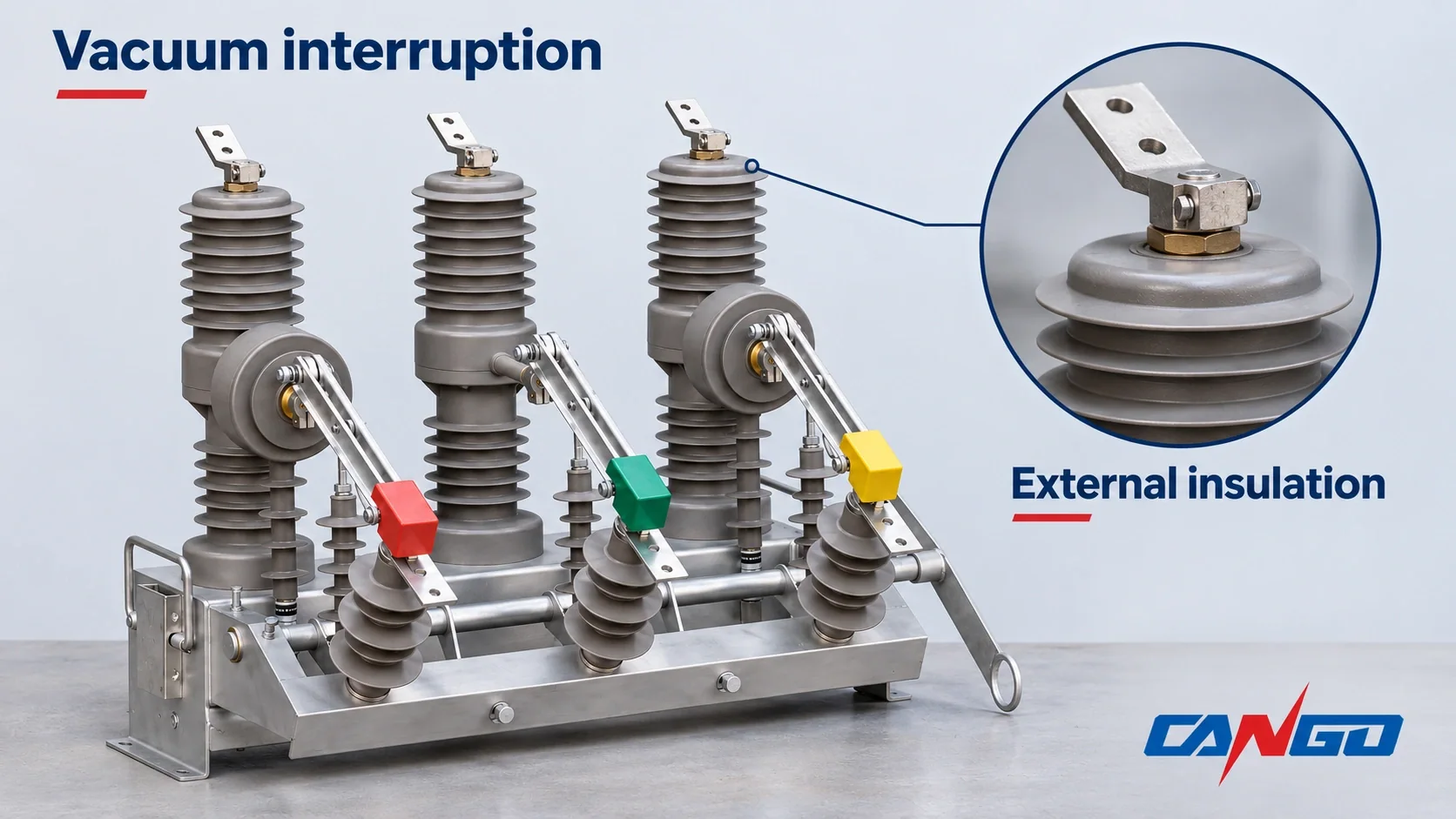
When the contacts in a vacuum interrupter part, the arc is formed from metal vapour released at the contact surfaces. The arc extinguishes as the alternating current reaches its natural zero. The vapour then condenses on the shields and contact surfaces, allowing the gap to regain dielectric strength quickly. The sealed vacuum chamber needs no interrupting-gas replenishment or recovery. External insulation is a separate specification.
That construction supports a compact interrupter and a simple sealed-for-life primary chamber. The operating mechanism still needs the inspections and servicing specified by its manufacturer, but the interruption medium itself is not handled on site. Vacuum is therefore well suited to repeated switching and to medium-voltage feeders where the breaker must combine fault interruption with dependable mechanical operation.
SF6: puffer compression and an electronegative gas
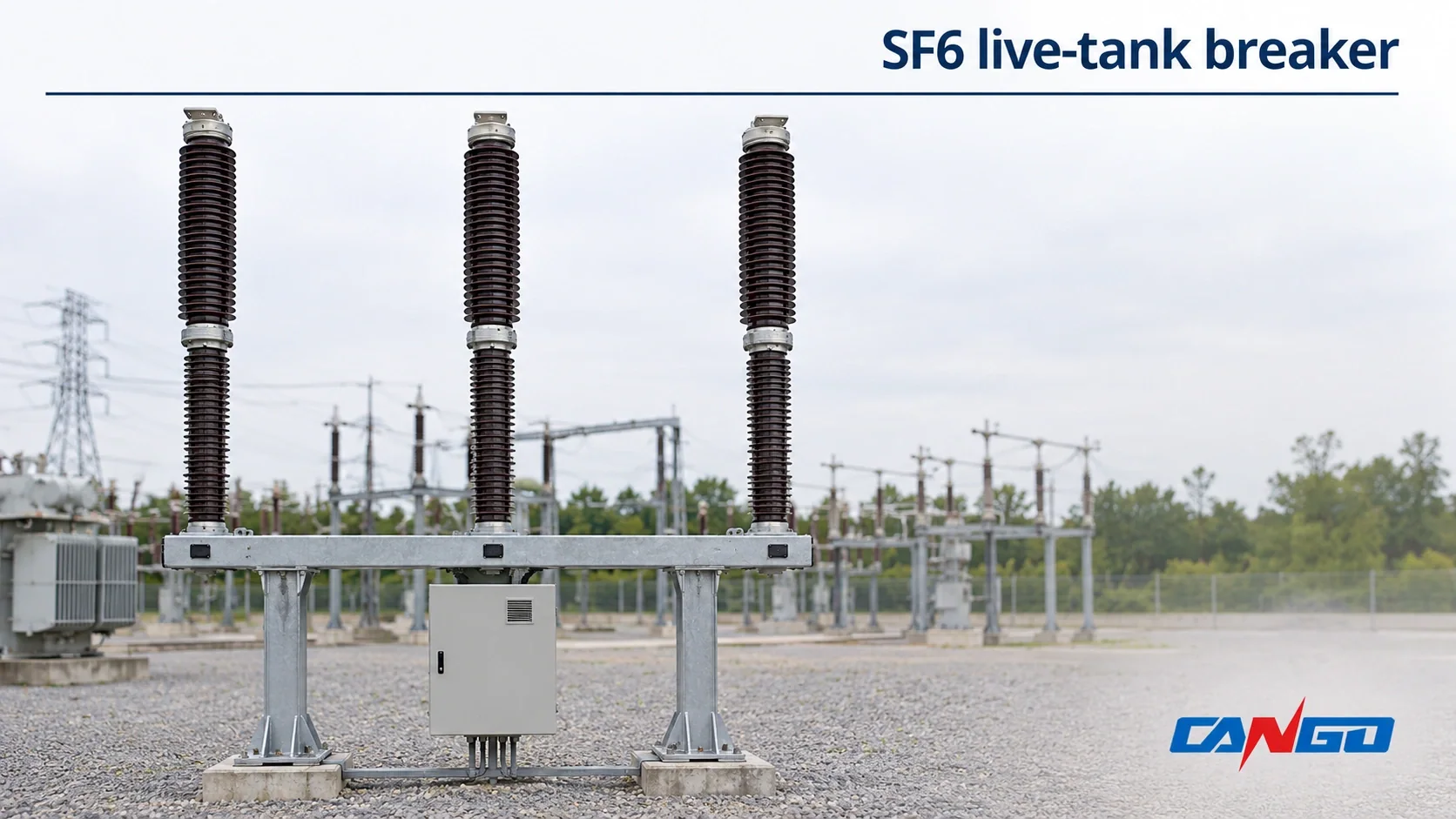
An SF6 breaker opens its contacts while a puffer or related compression arrangement drives SF6 across the arc. SF6 is electronegative: it captures free electrons in the arc zone, while the gas flow removes heat and restores dielectric strength after current zero. The interrupter, gas enclosure, seals, density or pressure monitoring and filling equipment all form part of the service system.
SF6 can support high dielectric performance in a compact GIS arrangement. The engineering trade-off is that the gas becomes a managed asset. The specification must identify gas compartments, monitoring, leak response, recovery equipment and end-of-life treatment, as well as the electrical ratings.
2. Full comparison table
| Selection factor | Vacuum circuit breaker | SF6 circuit breaker |
|---|---|---|
| Typical voltage range | The normal default for medium-voltage distribution, including CANGO vacuum products from 12 kV to 38 kV classes | Used mainly where higher-voltage interruption or a GIS duty justifies a gas-insulated architecture |
| Breaking capacity | Specify the required short-circuit current and test duty; CANGO examples cover 12.5/16/20 kA in ZW32-12G and 16-50 kA in KYN28-12 | Specify the required short-circuit current together with the gas system and enclosure duty |
| Electrical endurance | Repeated switching is handled by the interrupter and mechanism combination; verify the declared duty for the selected model | Verify the declared electrical duty, gas condition and interrupter design together |
| Mechanical endurance | Model-specific; ZW32-12G is rated for 10,000 mechanical operations | Model-specific; mechanism, seals and gas monitoring all affect the service plan |
| Maintenance | Inspect mechanism, control wiring, contacts and interlocks; the sealed vacuum interrupter is not refilled on site | Inspect mechanism, seals, density or pressure monitoring and gas-handling records; service requires trained gas procedures |
| Gas handling and monitoring | No interrupting gas handling; confirm vacuum interrupter condition through the manufacturer method | Gas compartment identification, density or pressure monitoring, leak response, recovery and records are part of the specification |
| Environmental impact | No F-gas in the interrupter; assess the complete equipment and end-of-life route | SF6 is an F-gas with a high global-warming impact; specify containment, recovery and regulatory compliance |
| Footprint | Compact interrupter and air-insulated panel arrangements are common in MV switchgear | Compact insulation can be valuable in GIS, but gas compartments and access provisions shape the installation |
The table compares engineering consequences, not a universal performance ranking. A buyer should compare complete type-tested equipment and its declared ratings, rather than comparing the interrupter alone.
3. Where each technology is actually used today
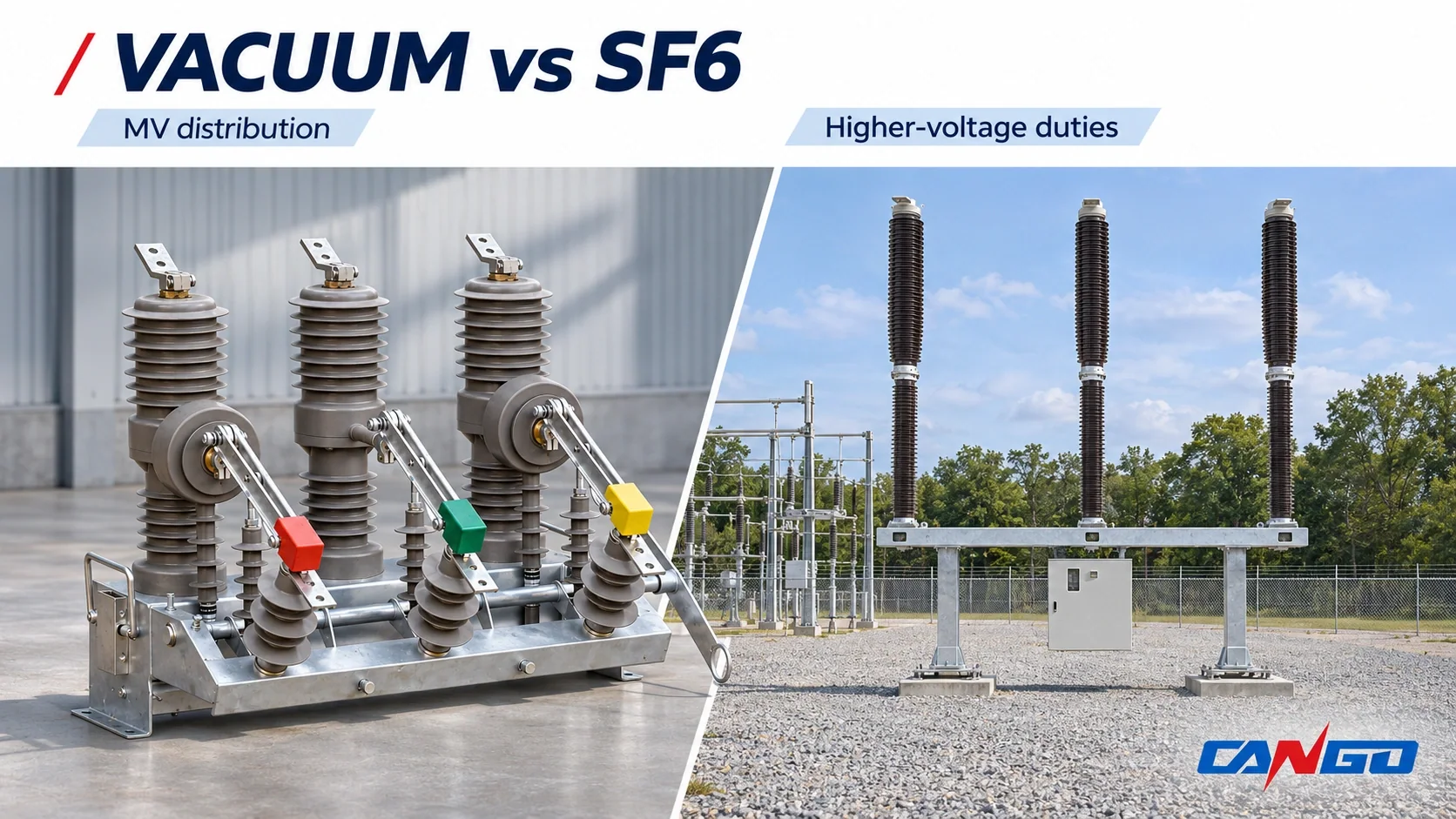
Vacuum dominates new medium-voltage distribution: utility feeders, industrial substations, renewable collector systems, motor feeders and metal-clad switchgear. It is also the natural fit for air-insulated panels where the interruption medium should not add a gas-management task. CANGO medium-voltage breakers are vacuum. The ZW32-12G is a 12 kV, 630 A outdoor breaker with 12.5/16/20 kA breaking ratings, a spring mechanism and 10,000 mechanical operations. The ZW32-12MG/630 is the permanent-magnet version in the same ratings class.
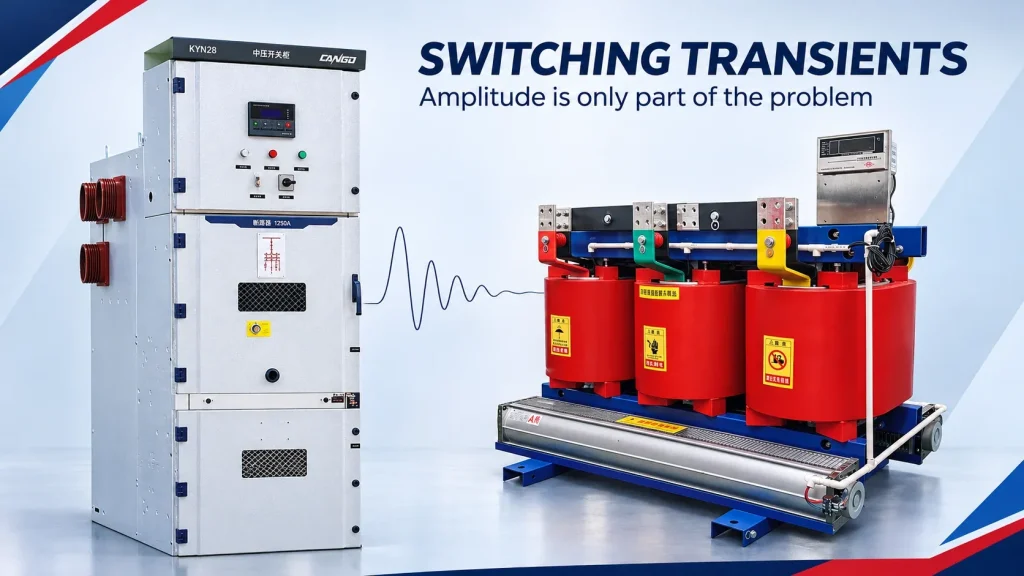
CANGO also offers the KGVZ recloser in 15.5, 27 and 38 kV classes, with 630 or 800 A ratings and vacuum interrupters in solid dielectric. For indoor metal-clad switchgear, KYN28-12 uses a vacuum breaker and covers 630-3150 A with 16-50 kA breaking ratings.
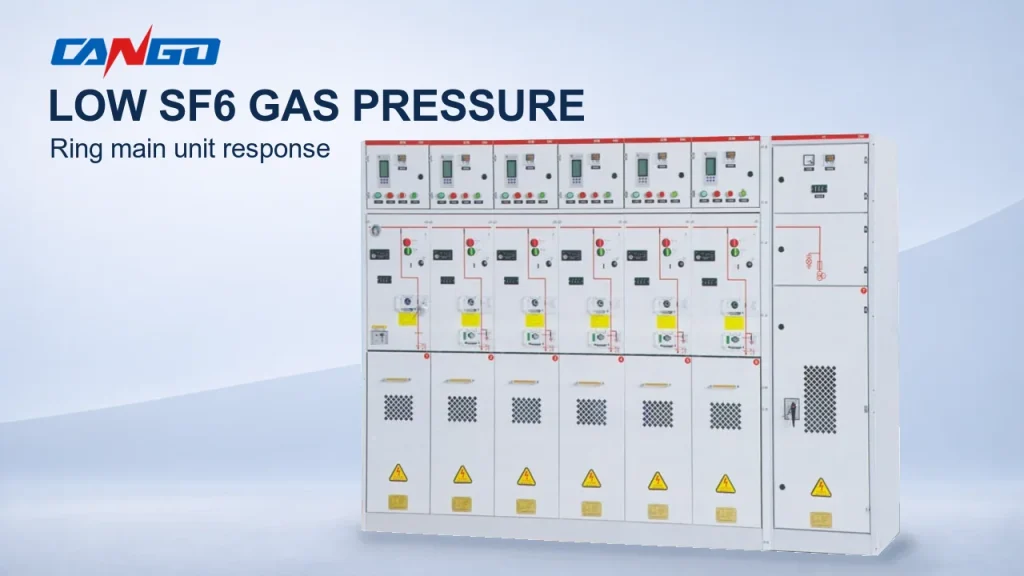
SF6 circuit breakers remain relevant in higher-voltage equipment and in GIS duties where the gas system provides the required insulation and compact arrangement. SF6 also appears in CANGO material as GIS and RMU insulation. CANGO’s stated medium-voltage breaker range is vacuum; SF6 in its GIS and RMU range is an insulation medium. For the insulation-system context, see air-insulated vs gas-insulated switchgear and SF6 vs G3 vs dry air GIS partial discharge.
4. What the EU F-gas rules mean when specifying a breaker
Regulation (EU) 2024/573 covers the breaking medium as well as insulation. For putting new medium-voltage distribution switchgear into operation, the general rule is no F-gas in either medium up to 24 kV from 1 January 2026, and above 24 kV through 52 kV from 1 January 2030, subject to the regulation’s derogations. The practical effect is simple: identify the medium in the procurement specification, confirm the voltage band and putting-into-operation date, and require the supplier to state the insulation and interruption medium. For the wider AIS versus GIS context, see air-insulated vs gas-insulated switchgear. Existing equipment is not subject to an automatic removal requirement. See the European Commission switchgear FAQ.
A vacuum breaker inside an SF6-insulated enclosure is not automatically F-gas-free: specify both media explicitly.
5. Total cost of ownership
Compare the complete operating plan rather than the purchase price. Vacuum usually reduces routine medium-related work because there is no interrupting gas inventory, gas recovery step or leak-monitoring loop for the interrupter. SF6 equipment may earn its place when its compact GIS arrangement avoids a larger building or difficult site layout, or when the voltage and duty make that architecture appropriate.
The qualitative cost questions are: how often will the breaker operate, who will perform condition checks, what gas equipment and records are required, how will an outage be scheduled, and how will the equipment be recovered at end of life? Include training, spares, monitoring, access and disposal in the same comparison as the breaker and panel.
6. CANGO product boundary and how to specify
Specify the interruption medium first, then the complete duty:
- State the system rated voltage and whether the equipment is AIS, GIS or an RMU.
- State continuous current, short-circuit breaking current, operating sequence and required endurance.
- State indoor or outdoor installation, control voltage, mechanism type and interlocking needs.
- For vacuum equipment, identify the interrupter, solid-dielectric or air-insulated arrangement and the manufacturer test evidence.
- For any gas-insulated equipment, identify every gas compartment, the gas type, monitoring method, leak and recovery plan, and the applicable EU date.
CANGO’s product boundary is clear: its medium-voltage breakers are vacuum. Use the RMU transformer protection guide, medium-voltage switchgear types, ratings and selection guide and 12 kV KYN28 switchgear when the next decision is panel architecture, feeder protection or product selection.
FAQ
Is an SF6 circuit breaker better than a vacuum circuit breaker?
Neither is universally better. For medium-voltage distribution up to 40.5 kV, vacuum is usually the default because it avoids interrupting-gas handling and fits common AIS and metal-clad arrangements. SF6 can make sense for higher-voltage or specific GIS duties where its gas-insulated architecture is required.
Why has vacuum replaced SF6 in medium-voltage distribution?
Vacuum removes the interrupting gas from the maintenance and environmental equation. The sealed interrupter supports repeated switching, while the panel can use air or solid dielectric insulation. That combination fits medium-voltage distribution and avoids adding an F-gas inventory to the breaker.
Does the EU F-gas regulation ban existing SF6 breakers?
Regulation (EU) 2024/573 sets requirements for new equipment in defined voltage bands and dates. It does not mean every existing installed SF6 breaker is immediately removed. Owners still need a compliant service, leak, record-keeping and end-of-life plan for the equipment they operate.
How long does a vacuum interrupter last, and what maintenance does it need?
There is no universal service life in years or number of fault interruptions. Use the selected model’s electrical endurance, contact-wear limits and maintenance instructions. CANGO’s ZW32-12G specifies 10,000 mechanical operations; that rating is not a guarantee of interrupter life or repeated full-fault interruption. Maintenance focuses on the operating mechanism, control circuit, interlocks, insulation and condition checks required by the manufacturer; the sealed interrupter is not refilled on site.
At what voltage does SF6 still make sense?
There is no single voltage cutoff for every design, and vacuum alternatives also exist at high voltage. SF6 remains a consideration above medium-voltage distribution ranges and in GIS duties where compact gas insulation is part of the equipment. In the EU, check the 24 kV and 52 kV thresholds and the applicable date before specifying any F-gas insulation or breaking medium.
References
- European Commission, FAQ on switchgear under Regulation (EU) 2024/573, general restrictions and existing equipment guidance.
- NIMI / Bharat Skills, Electrician (Power Distribution), trade theory, sections on vacuum and SF6 circuit breakers; qualitative interruption principles only.
- CANGO product information: ZW32-12G, ZW32-12MG/630, KGVZ and KYN28-12.