Power factor correction and harmonic mitigation address different aspects of an electrical system. Capacitor banks can supply reactive power to compensate inductive loads, but adding capacitors does not automatically solve harmonic distortion. Where nonlinear loads are present, the interaction between the network and the proposed correction equipment needs to be assessed before selection.
Understand what a capacitor bank changes
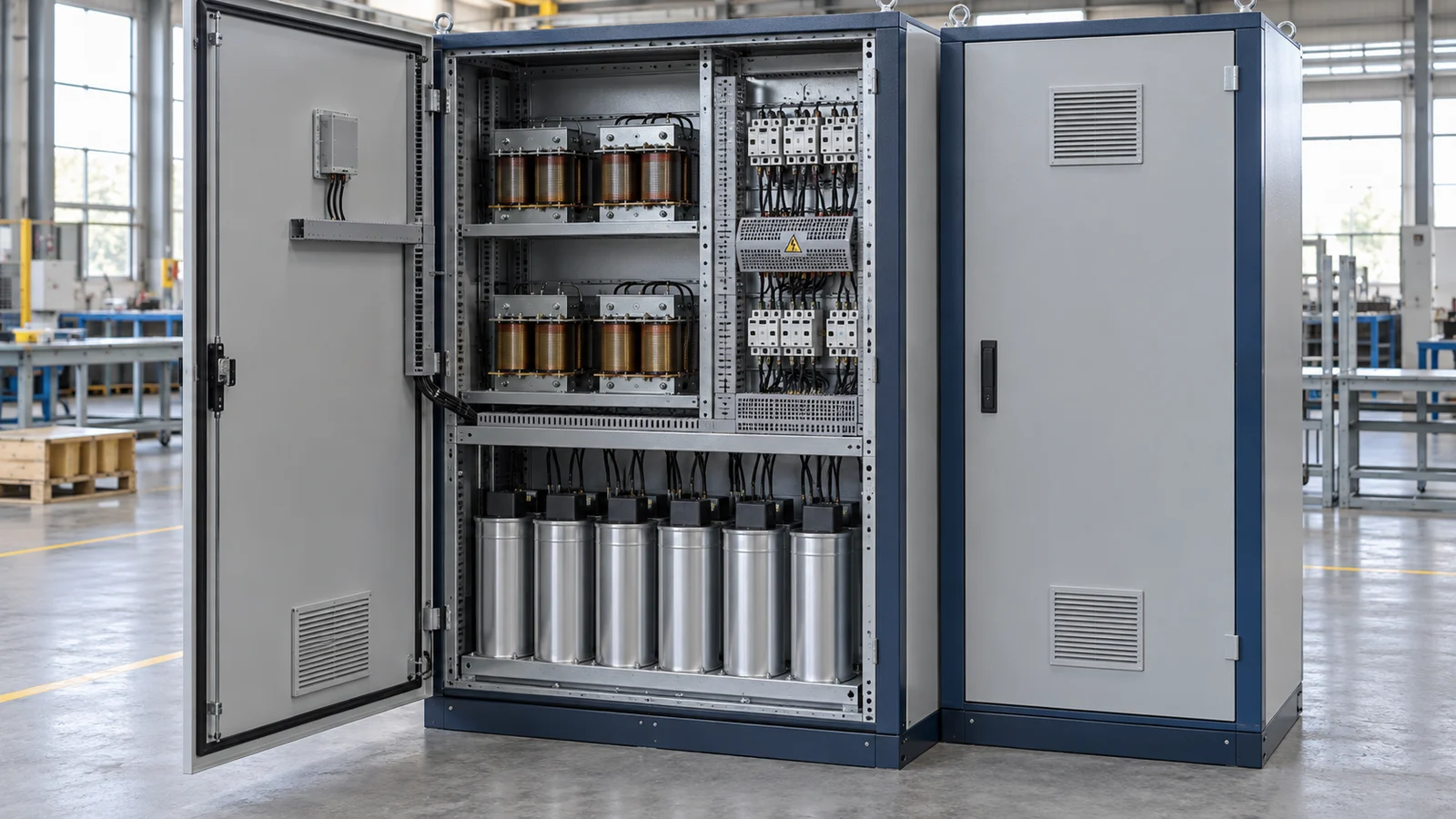
Inductive equipment draws reactive power as well as active power. Appropriately selected compensation supplies some of that reactive demand locally. Where demand varies, a stepped bank can adjust the connected compensation instead of leaving one fixed amount connected under every load condition.
This does not mean that the same bank size is suitable throughout the day. The load profile and operating pattern matter. A proposal based on a single power-factor reading can miss light-load periods or changes between production shifts.
Why harmonics need a separate review
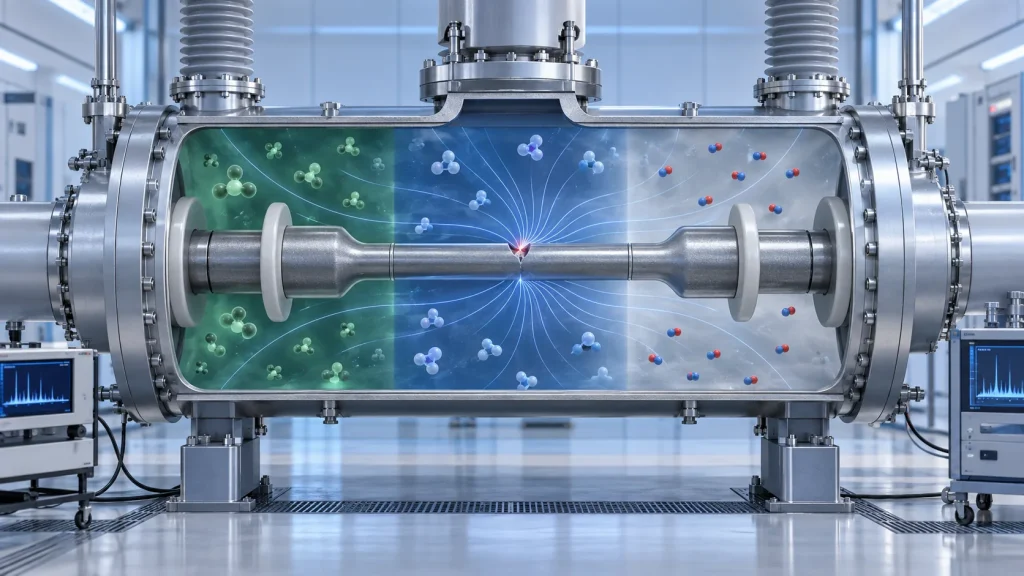
Nonlinear loads can distort current waveforms. Capacitors interact with the network impedance, and resonance can amplify particular harmonic components. A standard capacitor bank should therefore not be treated as a universal remedy for poor power quality.
Detuned reactors may be used with capacitor banks to manage this interaction. Dedicated harmonic filtering is a different design decision. The appropriate arrangement depends on the measured conditions and the engineering study; the presence of a reactor alone does not prove that every harmonic issue has been resolved.
Match the question to the information needed
| Project question | Useful information | What to review |
|---|---|---|
| Is reactive compensation required? | Active and reactive demand over representative operating periods, plus the utility’s billing criteria. | The correction objective and its relevance to the site’s tariff and operating conditions. |
| Does the demand change substantially? | Shift patterns, major load switching and light-load operation. | Fixed versus staged compensation and the control arrangement. |
| Are nonlinear loads significant? | Load inventory and representative harmonic measurements at the proposed connection point. | Capacitor-network interaction and whether detuning or filtering needs further study. |
| Is equipment being added to an existing system? | Existing capacitor-bank details, transformer data and an updated single-line diagram. | Compatibility with the present installation rather than isolated selection of a new cabinet. |
Provide measurements before requesting a final configuration
For a power-quality equipment inquiry, share the drawing, load description, available power-quality records and details of existing compensation. Qualified personnel should obtain any site measurements using appropriate procedures and equipment.
Ask the proposal to distinguish the intended reactive-power correction from any harmonic-mitigation scope. Define the operating conditions and acceptance criteria for each. This gives the buyer a clearer basis for comparing equipment than a general promise to improve power quality.
Technical references: Schneider Electric’s Electrical Installation Guide on power-factor correction principles and solutions for power-system harmonics.