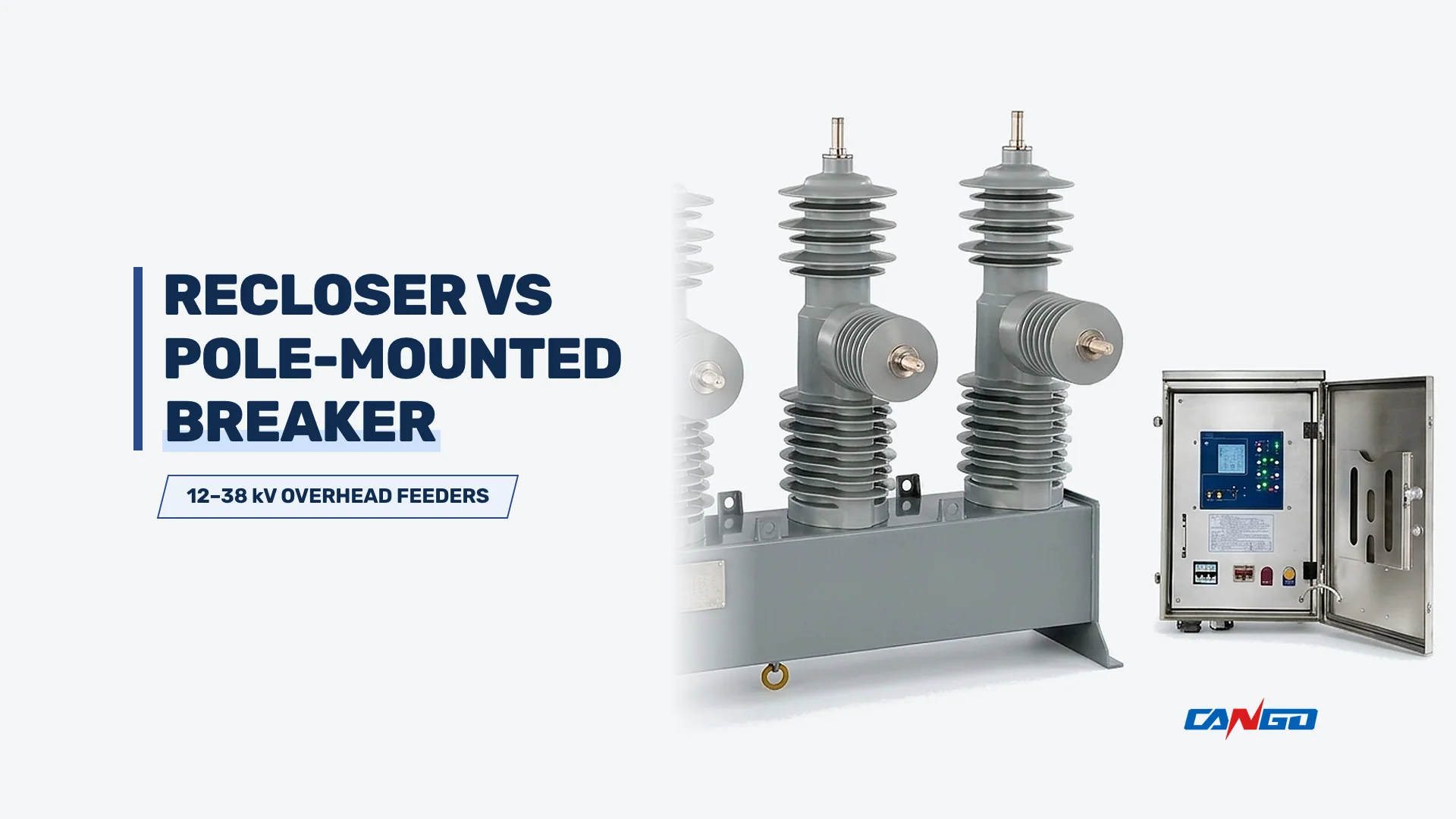
Choosing between an automatic circuit recloser vs pole mounted circuit breaker comes down to whether the overhead feeder requires a self-contained, multi-shot auto-reclosing protection system built to IEC 62271-111 / IEEE Std C37.60 or an outdoor vacuum switching interrupter built to IEC 62271-100 that pairs with an optional external controller and visible disconnector. On long, weather-exposed overhead lines where transient faults dominate, an automatic circuit recloser clears temporary arcs and restores service without dispatching a line crew; on shorter 12 kV industrial taps, feeder sectionalizing points, or maintenance boundaries needing a visible open break, a pole-mounted vacuum circuit breaker provides simpler isolation and lower integration complexity.
Standard and Architecture Divergence: IEC 62271-111 / IEEE C37.60 vs. IEC 62271-100
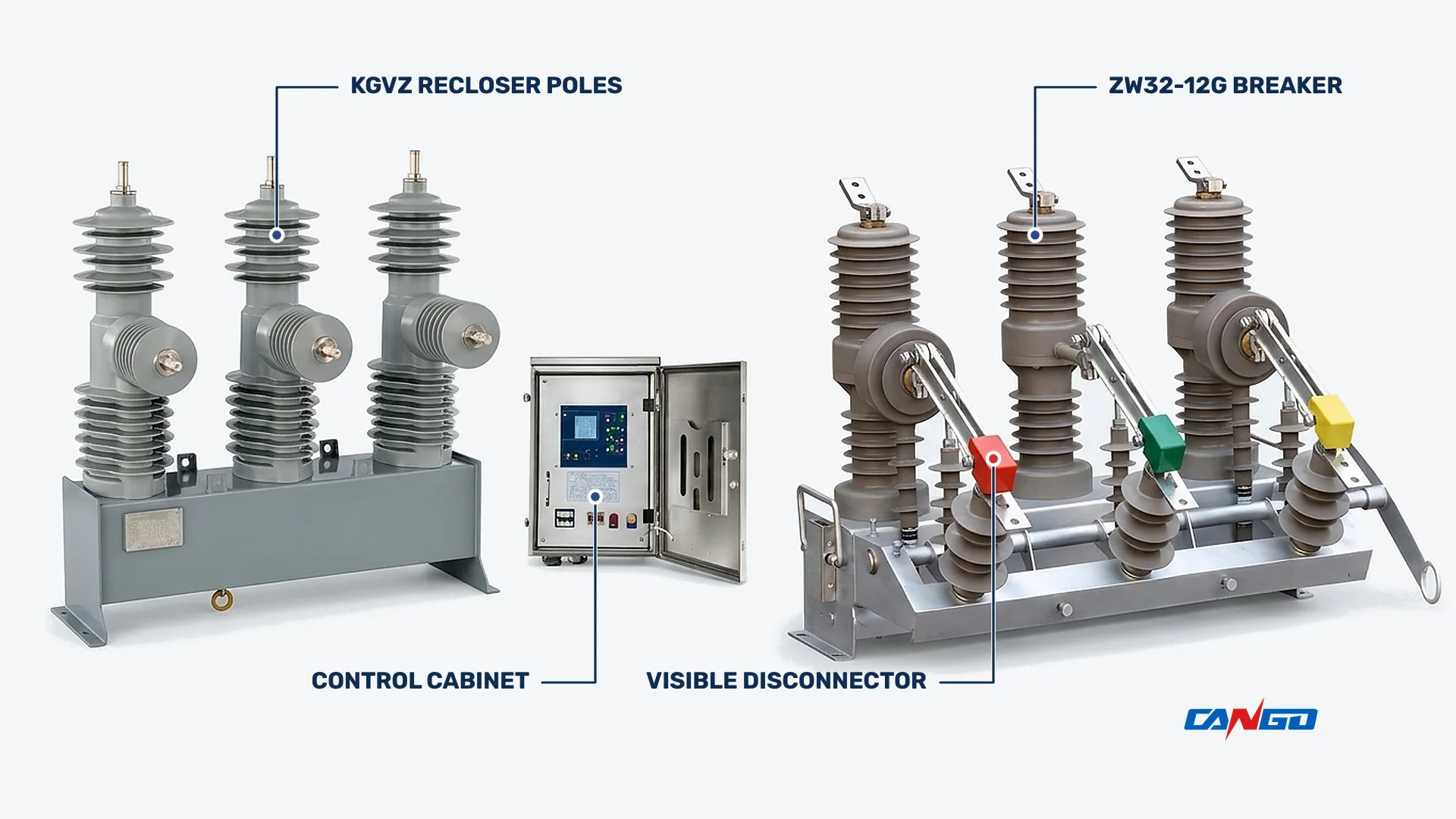
An automatic circuit recloser and a pole-mounted vacuum circuit breaker both interrupt medium-voltage fault current in vacuum, yet they are engineered and verified under different international product standards. IEC 62271-111 / IEEE Std C37.60 (Edition 3.0, 2019) defines an automatic circuit recloser for systems above 1 kV up to 38 kV as a complete self-controlled protection unit—integrating current/voltage sensing, electronic protection curves, multi-shot reclosing logic, and mechanical endurance for repeated fault-clearing sequences.
By contrast, a pole-mounted vacuum circuit breaker falls under IEC 62271-100 as an outdoor alternating-current circuit breaker. On its own, the breaker provides reliable load switching and short-circuit interruption, while protection relaying, reclosing logic, and SCADA telemetry depend on whether the utility specifies an external distribution-automation controller (FTU) and external current/voltage transformers.
| Comparison Dimension | Automatic Circuit Recloser | Pole-Mounted Vacuum Circuit Breaker |
|---|---|---|
| Governing Product Standard | IEC 62271-111 / IEEE Std C37.60 (>1 kV to 38 kV) | IEC 62271-100 (AC circuit-breakers >1 kV) |
| Sensing & Protection Integration | Factory-integrated sensors, protection curves, and dedicated recloser controller cabinet | Standalone switching unit; external CT/PT and distribution-automation controller optional |
| Core Operating Duty | Autonomous multi-shot trip-reclose-lockout cycles for transient overhead faults | Feeder load switching, fault interruption, and sectionalizing (with or without external FTU) |
| Visible Open-Break Disconnector | Typically requires separate pole-mounted disconnect switches upstream/downstream | Available with an integrated visible air-break disconnector (such as the G configuration on 12 kV outdoor breakers) |
| Primary Overhead Voltage Focus | 15.5 kV, 27 kV, and 38 kV utility radial and tie feeders | 12 kV rural grids, industrial plant taps, and substation-exit pole structures |
Specify an automatic circuit recloser whenever autonomous multi-shot transient fault clearing and integrated protection curves are mandatory on exposed 15–38 kV overhead feeders; specify a pole-mounted vacuum circuit breaker when 12 kV feeder sectionalizing, visible disconnector isolation, or custom external protection integration drives the pole design.
Multi-Shot Auto-Reclosing and Transient Fault Clearing on Overhead Lines
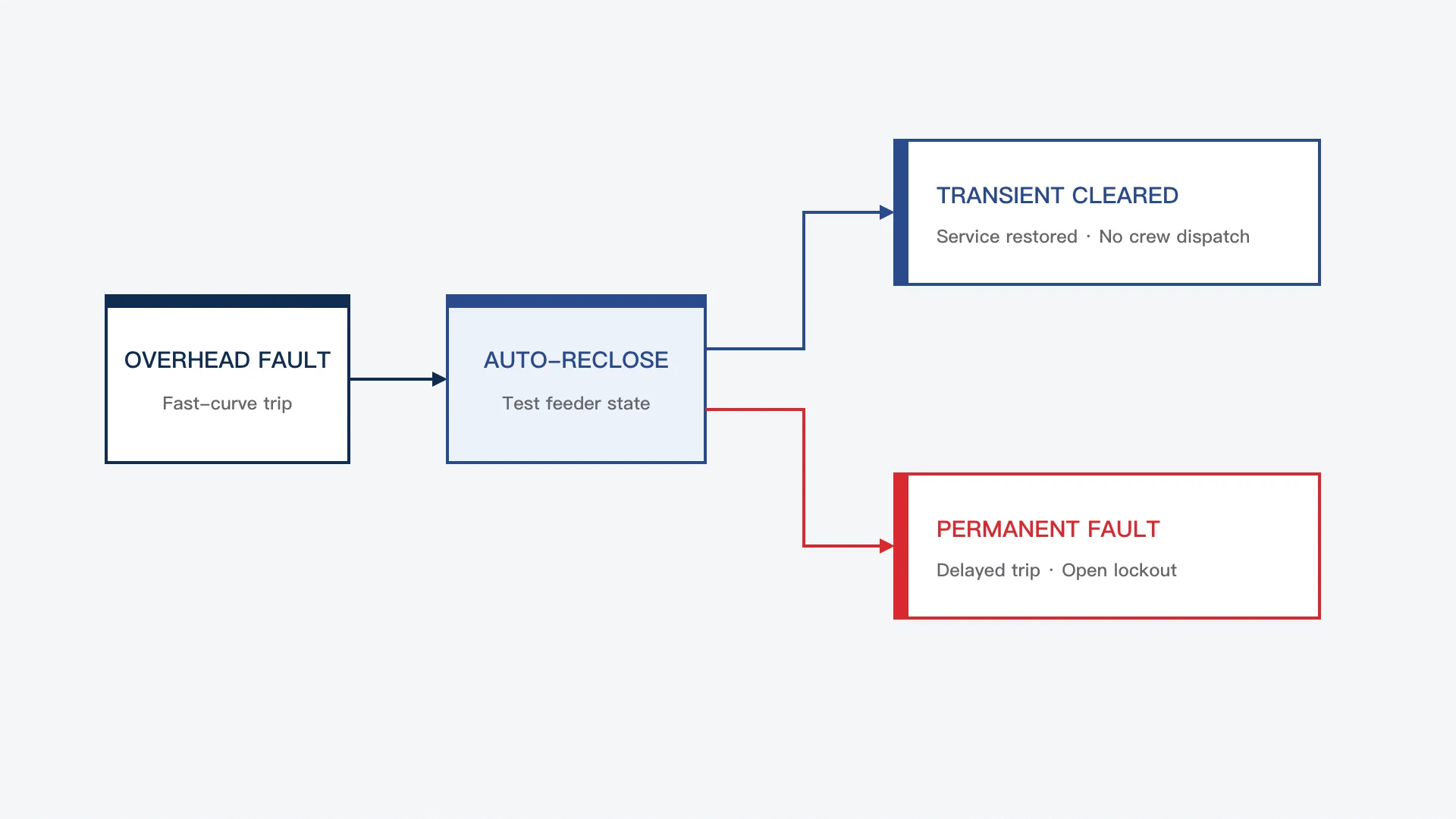
Overhead distribution feeders experience frequent temporary faults—wind-blown tree limbs, lightning-induced insulator flashovers, and wildlife contact—that self-clear as soon as the arc is extinguished for a fraction of a second. A conventional breaker without auto-reclosing locks open on the very first trip, leaving downstream customers without power until a patrol crew inspects the line and manually closes the switch.
An automatic circuit recloser executes a programmed sequence of trip-and-reclose shots. On the initial fault, the recloser opens rapidly to extinguish the arc, waits through a dead-time interval so ionized air dissipates and debris falls clear, and then automatically recloses to test the line. If the fault was transient, the feeder stays energized and the controller resets its sequence; if the fault is permanent (such as a downed conductor or failed pole transformer), the recloser completes its programmed shots and opens to final lockout, isolating the faulted section.
Fuse-Saving vs. Fuse-Blowing Coordination with Lateral Cutouts
One of the defining engineering capabilities of an IEC 62271-111 / IEEE C37.60 recloser is dual time-current characteristic (TCC) curve coordination with downstream expulsion fuse cutouts on lateral spurs:
- Fuse-Saving Scheme: The recloser trips on a fast curve before the downstream lateral fuse element melts during a temporary fault. When the recloser recloses and the transient fault is gone, the fuse remains intact—avoiding truck rolls to replace blown cutouts on remote rural branches.
- Fuse-Blowing Scheme: Where utilities prioritize avoiding momentary blinks on the main trunk for sensitive industrial customers, the recloser uses a delayed curve on the first shot so the lateral fuse melts and isolates the spur permanently while the main feeder stays energized.
Achieving clean fast-then-delayed TCC switching requires a controller and interrupter verified together for high-speed fault interruption and rapid reclosing duty. While a pole-mounted vacuum circuit breaker paired with an external FTU can mimic basic reclosing on 12 kV lines, engineers must verify that the breaker’s spring-charging or permanent-magnet energy storage can sustain the required open-close-open duty cycle without depleting stored energy mid-sequence.
Visible Isolation, Actuator Choice, and Site Maintenance Boundaries
Beyond protection curves, pole-top maintenance safety and actuator architecture often decide the specification. Utilities and industrial facility engineers operating 12 kV overhead taps frequently require a visible air-break gap on the pole before line crews ground the downstream conductor.
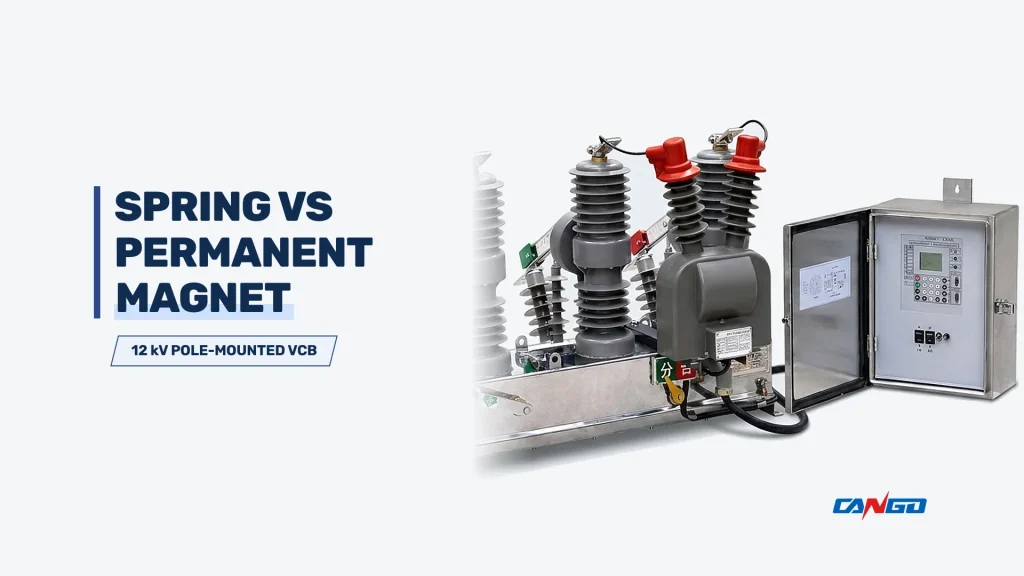
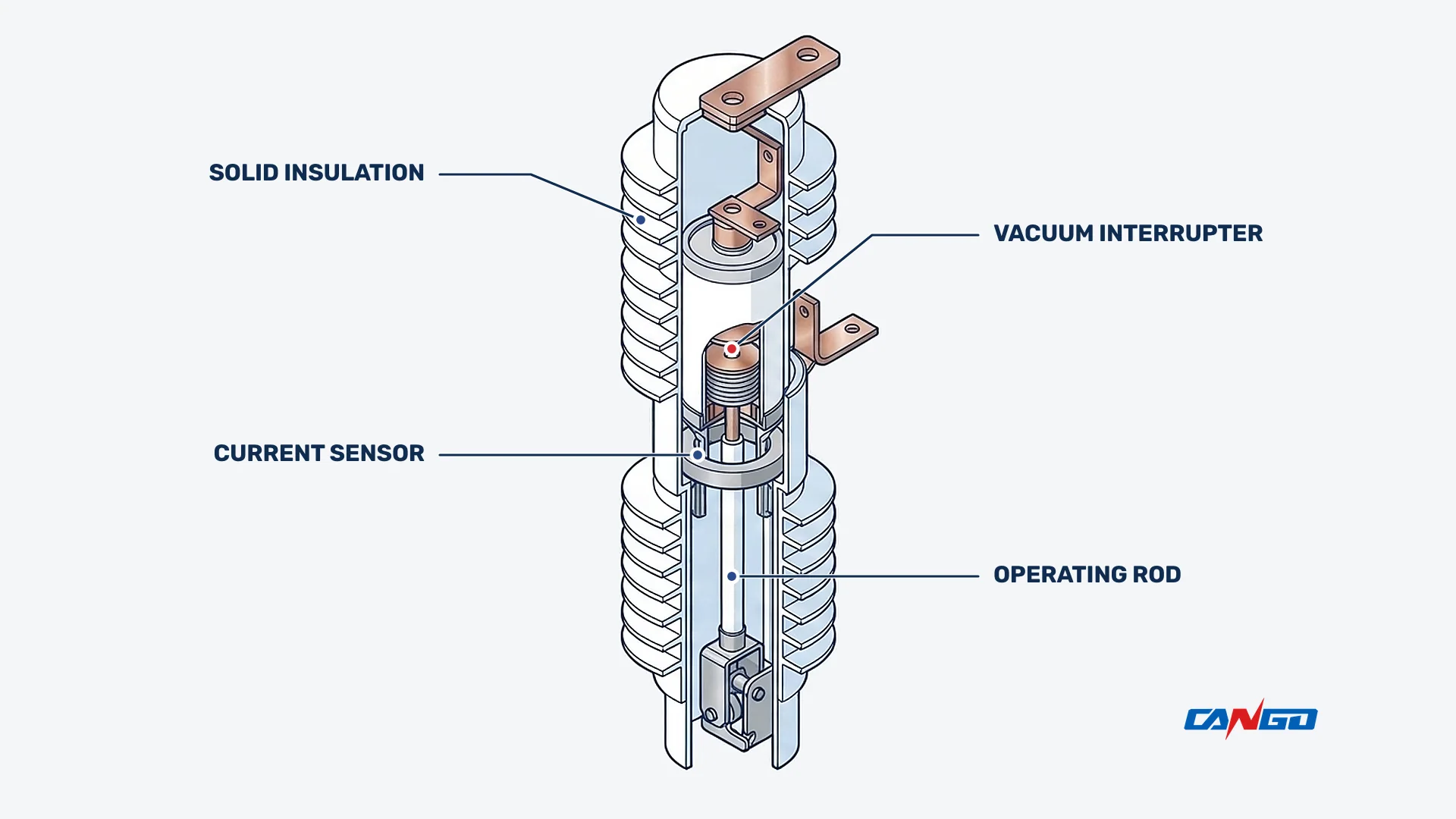
Many 12 kV pole-mounted vacuum circuit breakers—such as spring-operated units with an integrated side-mounted disconnector—combine vacuum fault interruption with a mechanically interlocked visible disconnector blade on the same pole frame. By contrast, a solid-dielectric automatic circuit recloser encloses its vacuum interrupters inside sealed epoxy/silicone poles with no visible contact gap, meaning site work rules require separate upstream and downstream disconnect switches (or bypass switches) on the pole structure for safe isolation.
Operating mechanism selection also shapes long-term field reliability:
– Spring Operating Mechanisms store closing energy mechanically and allow manual crank charging during total auxiliary-power loss, though linkages and charging motors require periodic inspection.
– Permanent-Magnet Actuators replace multi-part mechanical latches with electromagnetic coil pulses and capacitor energy storage, cutting moving-part wear on high-operation feeders while placing higher importance on control-cabinet capacitor and auxiliary PT power health.
(For broader substation-level switching and indoor metal-clad alternatives where overhead feeders terminate into indoor gear, compare medium-voltage switchgear types and ratings and medium-voltage switchgear for utility distribution networks.)
Feeder Selection Matrix and Verified CANGO Pole-Mounted Portfolio
Matching equipment to feeder topology prevents both under-specifying protection on long rural lines and over-buying complex recloser controls for simple industrial tap isolation.
| Overhead Feeder Scenario | Dominant Engineering Priority | Recommended Equipment Class | Verified CANGO Model & Declared Scope |
|---|---|---|---|
| Long rural or coastal 15.5–38 kV radial/tie feeder with frequent transient faults | Autonomous multi-shot auto-reclosing, fast/delayed TCC fuse coordination, SCADA telemetry | Solid-Dielectric Automatic Circuit Recloser (IEC 62271-111 / IEEE C37.60) | KGVZ 15-38kV Automatic Circuit Recloser (15.5 kV, 27 kV, 38 kV; 50/60 Hz; 630 A or 800 A; BC300 or BC500 control) |
| 12 kV industrial tap, rural branch, or sectionalizing point needing visible open break | Vacuum fault interruption + integrated visible disconnector + manual or motorized spring operation | 12 kV Pole-Mounted Vacuum Circuit Breaker (Spring + Disconnector) | ZW32-12G 12kV Outdoor Vacuum Circuit Breaker (12 kV, 630 A, spring mechanism, G disconnector, optional DA controller) |
| 12 kV automated pole node with frequent switching duty | Reduced mechanical linkage wear via permanent-magnet actuation | 12 kV Permanent-Magnet Pole-Mounted Vacuum Circuit Breaker | ZW32-12MG/630 12kV Permanent-Magnet Outdoor Vacuum Circuit Breaker (12 kV, 630 A, permanent-magnet operating mechanism) |
Choose the KGVZ automatic circuit recloser when feeder voltage spans 15.5 to 38 kV and integrated auto-reclosing control is required out of the box; choose ZW32-12G or ZW32-12MG/630 across CANGO’s Pole-Mounted Circuit Breakers portfolio when 12 kV outdoor vacuum switching, spring vs. permanent-magnet actuation, or an integrated disconnector governs the pole layout.
RFQ Data Checklist Before Requesting Quotation
To keep manufacturer configuration review aligned with utility protection studies, prepare these project inputs before sending an inquiry via CANGO Contact:
– System electrical duty: Nominal and maximum system voltage (12 kV, 15.5 kV, 27 kV, or 38 kV), frequency (50 Hz or 60 Hz), rated continuous current (630 A or 800 A), and required short-circuit breaking current from the feeder fault study.
– Control and protection scope: Whether a dedicated recloser controller (such as BC300 or BC500 on KGVZ) or an external distribution-automation controller (FTU) with PT auxiliary power and SCADA communication protocol is required.
– Isolation and mounting boundaries: Whether an integrated disconnector (G) is needed, pole-structure clearances, ambient temperature/altitude conditions, and lightning-arrester or bypass-switch mounting (civil pole erection, protection-relay settings sign-off, and utility grid commissioning remain within the EPC or utility scope).
Frequently Asked Questions
Can a pole-mounted vacuum circuit breaker perform automatic reclosing?
Yes, if it is paired with an external distribution-automation controller (FTU), current/voltage sensors, and an operating mechanism (motorized spring or permanent-magnet with capacitor storage) capable of executing the required open-close-open duty cycle. However, an automatic circuit recloser under IEC 62271-111 / IEEE C37.60 delivers integrated sensing, TCC curves, and multi-shot reclosing as a single factory-verified protection system.
Does an automatic circuit recloser replace pole-mounted disconnect switches?
No—solid-dielectric automatic circuit reclosers house their vacuum interrupters inside sealed poles without a visible air gap. Utility safety rules generally require separate upstream and downstream disconnect switches (and bypass switches where live maintenance is practiced) to establish a visible open point before grounding the line.
Why are vacuum interrupters standard in modern pole-mounted reclosers and breakers?
Vacuum interrupters extinguish medium-voltage arcs inside sealed ceramic bottles without relying on insulating oil or SF6 gas for arc interruption, minimizing fire risk, gas-pressure leakage maintenance, and environmental compliance burdens on remote outdoor poles. For a broader look at arc-quenching media choices, see vacuum circuit breaker vs SF6 circuit breaker.
References
- International Electrotechnical Commission (IEC) / IEEE, IEC 62271-111 / IEEE Std C37.60: High-voltage switchgear and controlgear – Part 111: Automatic circuit reclosers for alternating current systems up to and including 38 kV (Edition 3.0, 2019 — dual-logo recloser standard scope referenced).
- International Electrotechnical Commission (IEC), IEC 62271-100: High-voltage switchgear and controlgear – Part 100: Alternating-current circuit-breakers (AC circuit-breaker standard scope referenced).
- CANGO Power (Zhejiang Kangge Electric Co., Ltd.), Pole-Mounted Circuit Breakers, KGVZ 15-38kV Solid-Dielectric Automatic Circuit Recloser, ZW32-12G 12kV Outdoor Vacuum Circuit Breaker, and ZW32-12MG/630 12kV Permanent-Magnet Outdoor Vacuum Circuit Breaker (CANGO product information for declared ratings and configurations).
- CANGO Power, Vacuum Circuit Breaker vs SF6 Circuit Breaker and Medium-Voltage Switchgear for Utility Distribution Networks (verified internal references).