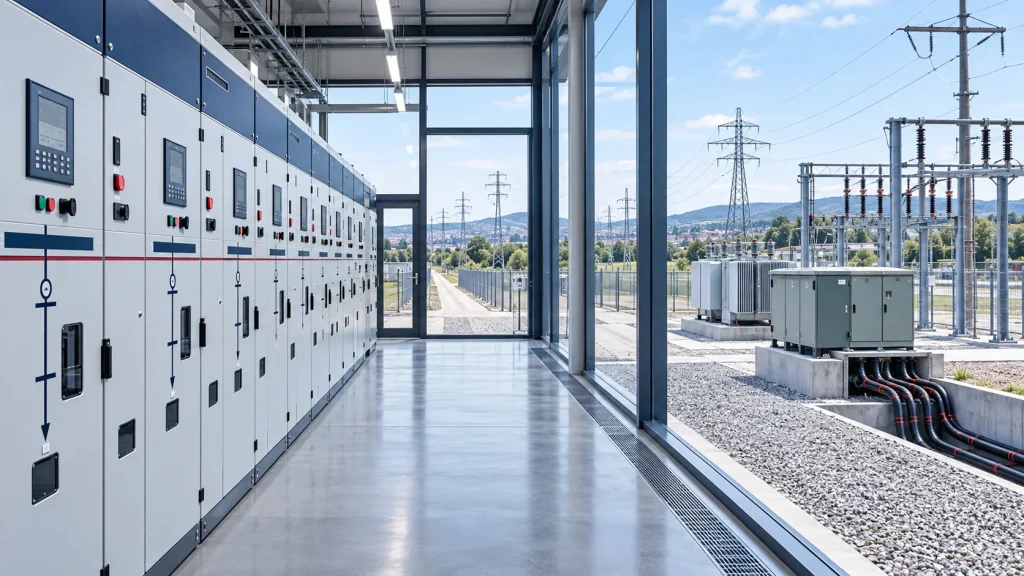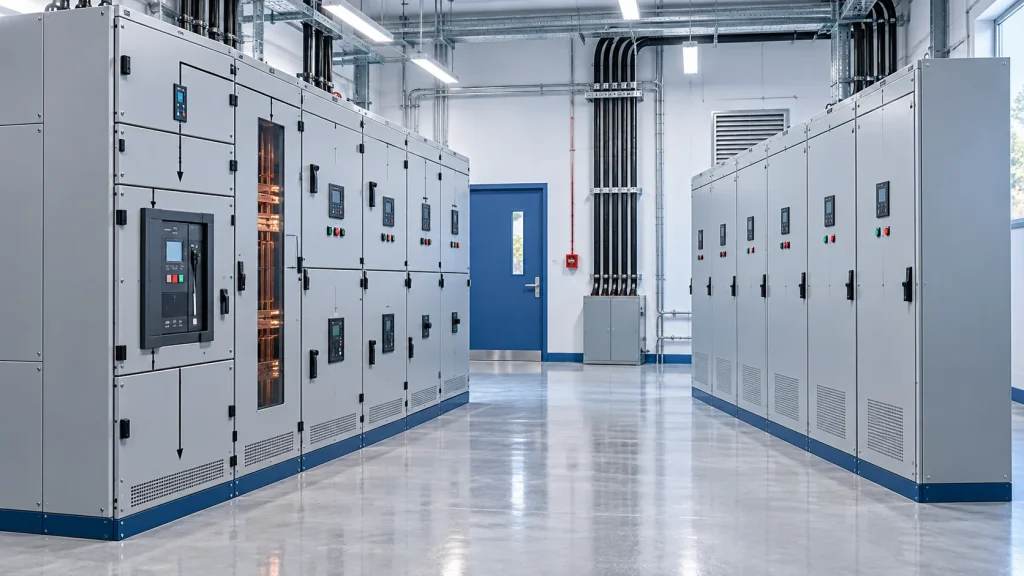
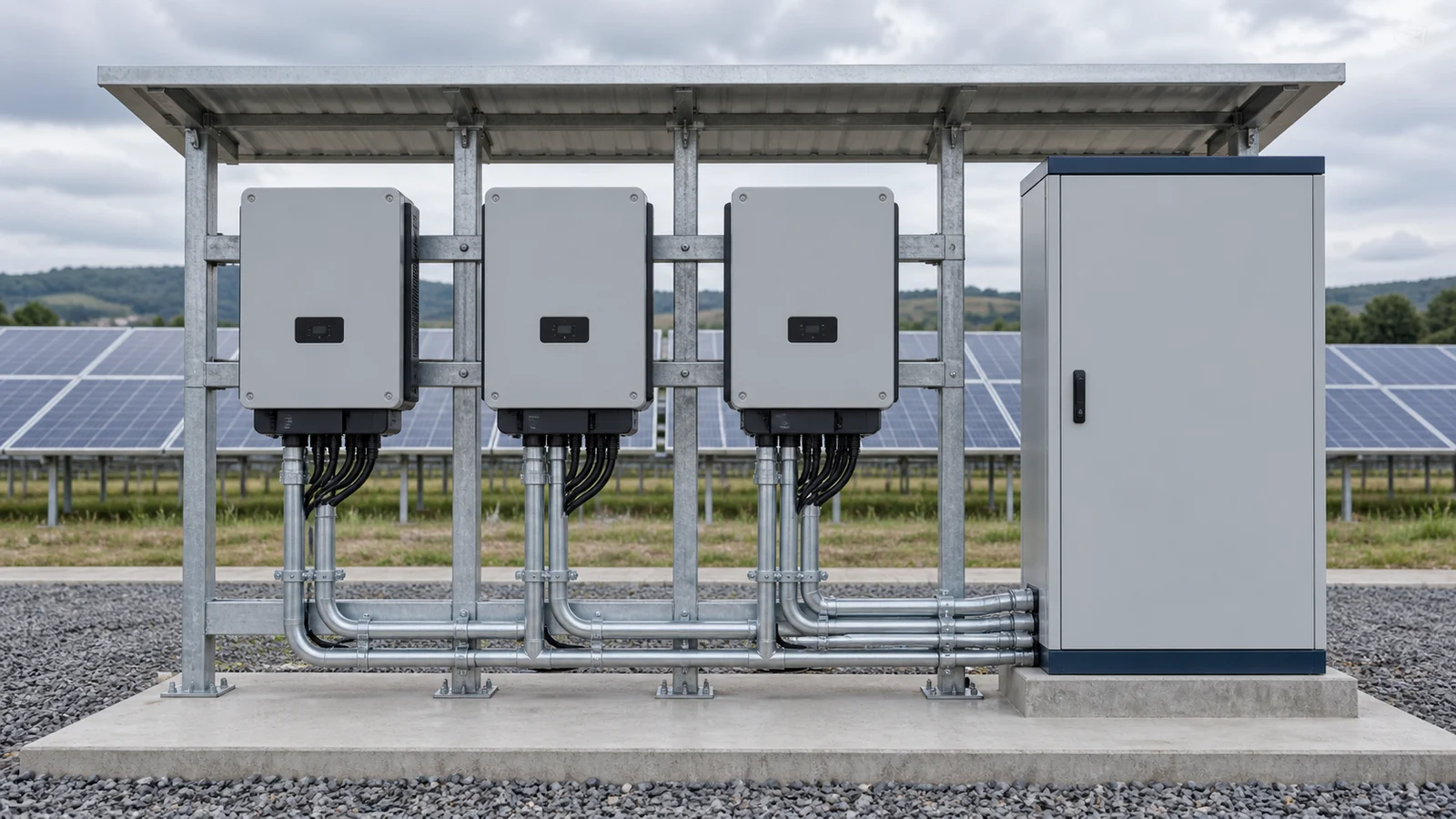
A photovoltaic grid-connection cabinet is part of the electrical path between the inverter output and the site’s connection point. Its scope depends on the installation: it may collect several inverter circuits, provide switching and protection, or incorporate specified metering and interface functions. It does not replace the inverter, and one cabinet layout cannot suit every utility connection.
Separate the DC side from the AC side
Solar modules produce direct current (DC). The inverter converts this to alternating current (AC) for connection to the electrical installation. Equipment selected for the inverter’s AC output must be assessed for that AC system; a DC combiner box and an AC collection cabinet serve different positions in the circuit.
The inverter documentation is an important starting point because it defines the output characteristics and the manufacturer’s connection requirements. The project design then needs to coordinate these with the receiving switchboard and the network connection conditions.
Define the interfaces before selecting a cabinet
| Interface | Information to agree | Scope question |
|---|---|---|
| Inverter to AC collection | Inverter quantity, model, output ratings and feeder arrangement. | Which outgoing inverter cables and termination accessories are included? |
| AC collection to site distribution | Connection voltage, cable route and receiving-board details. | Who supplies the interconnecting cables and any modifications to the existing board? |
| Site to utility | Approved connection requirements and metering arrangement. | Which protection, metering and disconnection functions belong inside the cabinet? |
| Controls and monitoring | Required signals, communications and export-control responsibilities. | Who integrates and commissions the interface? |
Use the connection point to frame the review
The connection point affects how the existing installation and solar production interact. Provide a single-line diagram showing the inverter feeders, the proposed AC cabinet, existing loads and the point of connection. If export limitation is required, identify the specified control system and its measurement location rather than assuming the cabinet alone provides that function.
Protection and switching must be coordinated with the system design, inverter instructions and applicable network requirements. Avoid selecting equipment solely from the solar array’s nameplate power: the AC output data and the actual installation conditions also matter.
Prepare a clear supply boundary
For photovoltaic grid-connection equipment, send the inverter datasheets, drawing revision, site conditions and the required cabinet scope together. Include outdoor exposure, cable entry and access constraints where relevant.
A useful proposal states what the assembly includes, what other parties provide and what remains subject to utility or engineering approval. This keeps an equipment quotation separate from the approval of the complete solar installation.
Technical references: Schneider Electric’s Electrical Installation Guide on integrating solar production and inverter conversion and power quality.