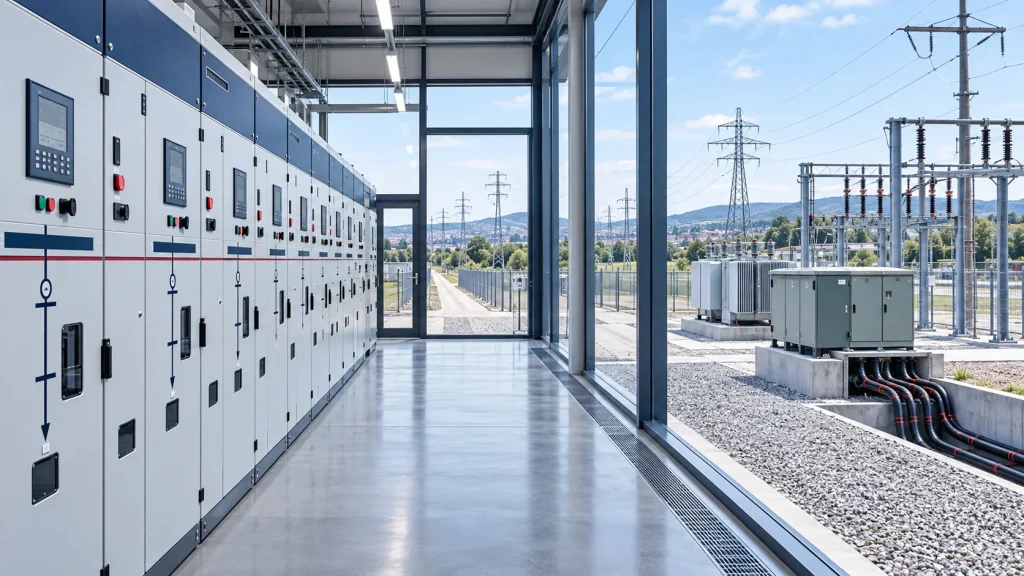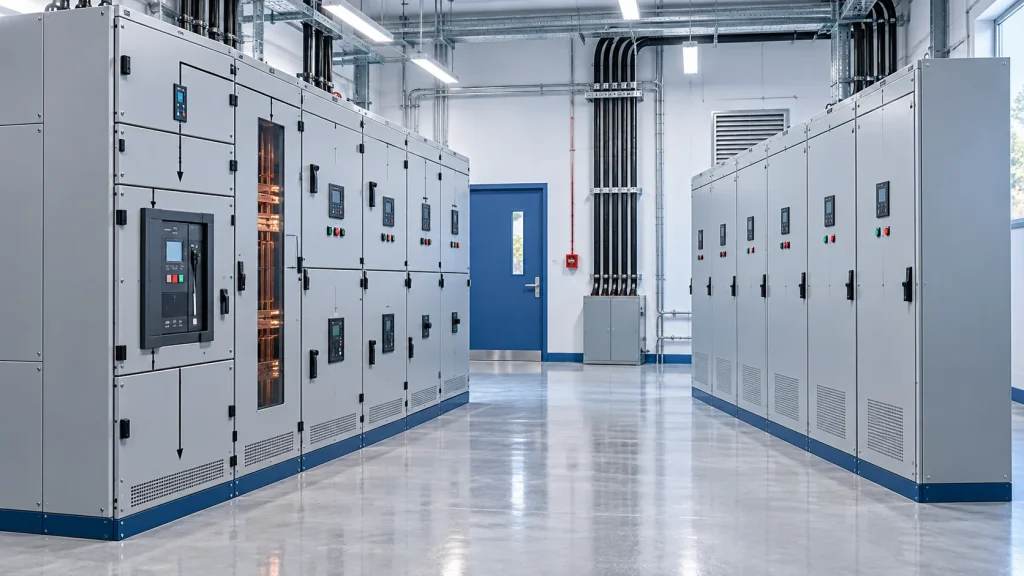
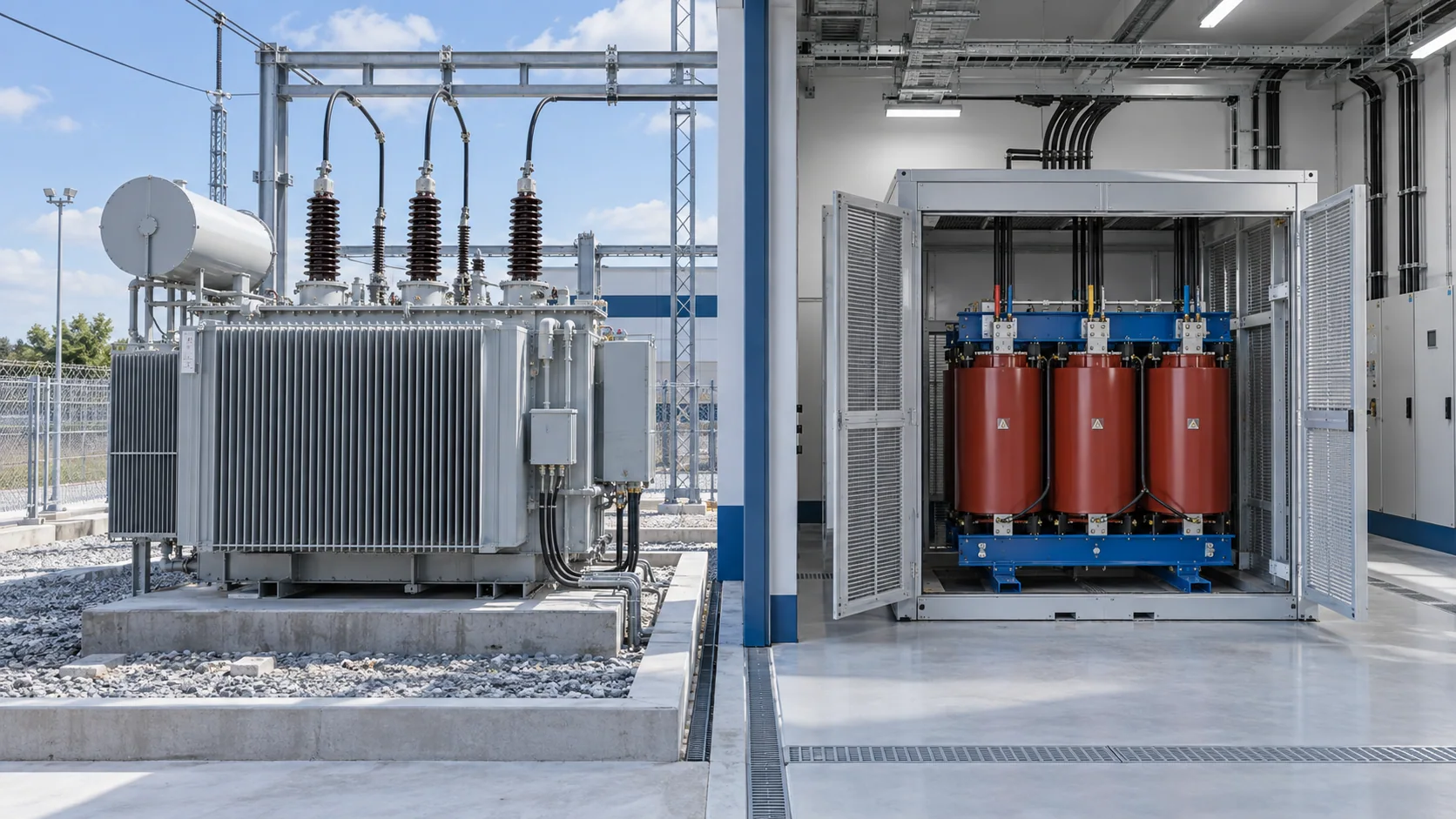
Neither oil-immersed nor dry-type transformers are the best choice for every project. The useful question is not “Which type is better?” but “Which construction fits this electrical duty, installation and operating environment with the fewest unresolved project risks?”
For buyers, the comparison should begin with location, applicable fire and environmental rules, ambient conditions, cooling and ventilation, load profile, access and maintenance capability. Price should be compared only after both offers cover the same technical duty, accessories, tests, documents and installation boundaries.
Quick comparison for project screening
| Comparison point | Oil-immersed transformer | Dry-type transformer | What the buyer should verify |
|---|---|---|---|
| Insulation and cooling construction | Windings and core are immersed in insulating liquid; in an oil-immersed unit, that liquid is transformer oil | Windings use solid and gaseous insulation without an insulating-liquid tank | Offered construction, cooling designation and applicable standard |
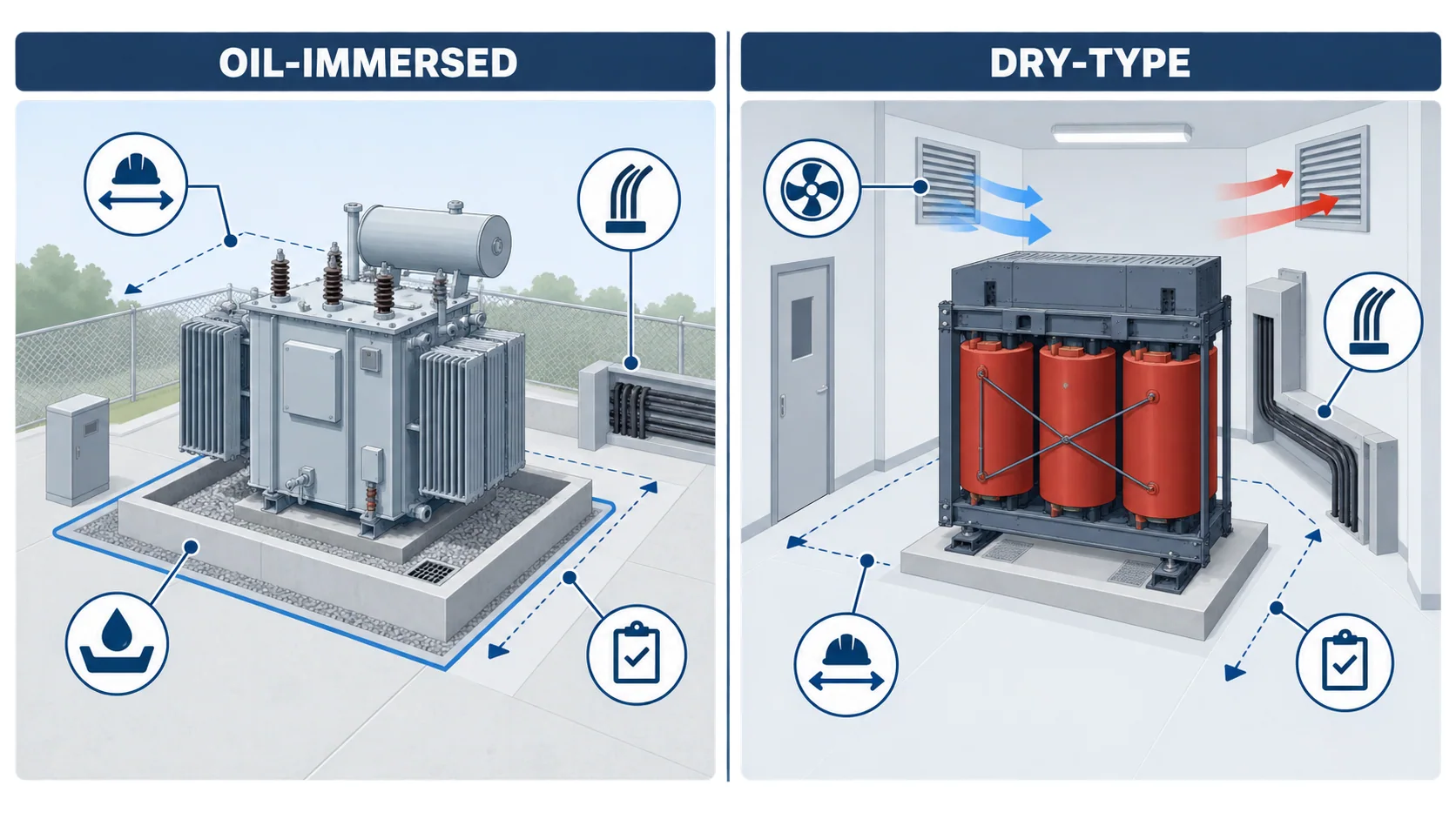
| Installation starting point | Commonly considered for outdoor substations and utility or industrial distribution, subject to site design | Commonly considered where indoor integration and avoiding an insulating-liquid inventory are important | Actual location, local rules, enclosure, room and separation requirements |
| Fire and environmental interface | Fluid type, leakage control, containment and fire provisions may affect the surrounding installation | No insulating-liquid spill to manage, but fire behaviour, material class and room design still require review | Project fire strategy, environmental requirements and approved equipment classification |
| Thermal interface | Heat is transferred through the liquid and tank or radiators; natural or forced cooling may be offered | Heat is transferred to air through natural or forced ventilation, depending on design | Guaranteed rating at site ambient and altitude, ventilation duty and temperature-rise basis |
| Site exposure | Tank and sealing design can suit many outdoor applications, but corrosion, accessories and fluid condition still matter | Ventilated, encapsulated and enclosed dry designs respond differently to dust, moisture and contamination | Pollution, humidity, condensation, salt, dust, enclosure and space-heater requirements |
| Maintenance focus | External condition, leaks, bushings, accessories and insulating-liquid condition may form part of the service plan | Cleanliness, air paths, connections, enclosure, temperature sensors and fans may form part of the service plan | Manufacturer instructions, inspection access and local maintenance capability |
| Space and civil works | Transformer dimensions are only part of the footprint; clearances, containment and handling routes can govern | Room ventilation, clearances, air paths and enclosure access can govern | General-arrangement drawings and the complete installed footprint |
| Offer comparison | Rating and losses are model-specific | Rating and losses are model-specific | Guaranteed no-load loss, load loss, impedance, sound and temperature-rise data at the same reference conditions |
This table is a screening tool, not a substitution for the project specification. The exact installation requirements depend on the selected transformer, fluid or insulation system, rating, enclosure and governing regulations.
Start with the installation, not the transformer label
The transformer affects more than the single-line diagram. It also creates interfaces with the building, fire strategy, environmental plan, cooling system, access route and maintenance program.
For an indoor location, buyers should establish whether the room is occupied or attached to occupied space, what fire and building rules apply, how heat will be removed and how replacement equipment could enter or leave. Avoid turning “dry type is for indoors” into an automatic rule. Dry-type construction may remove the need to manage an insulating-liquid inventory, but the room still needs an appropriate enclosure, ventilation path, working clearances and fire review.
For an outdoor location, do not assume that the word “oil-immersed” completes the specification. The project still needs to define the fluid, tank arrangement, corrosion conditions, cable terminations, accessories, drainage or containment strategy, access and protection against site hazards. Some dry-type designs can also be supplied for demanding environments when their enclosure and insulation system are designed for those conditions; suitability must come from the actual offered design.
The general IEC power-transformer requirements in IEC 60076-1 include specification, transport, safety, environmental and condition-monitoring topics. They are useful reminders that a transformer purchase is a system decision, but the project must still identify which standards and local rules apply.
Compare operating conditions, not generic advantages
A type-level comparison cannot replace site and duty data. Ask each supplier to rate its proposed transformer against the same inputs.
Ambient temperature and altitude
Site temperature and altitude can affect thermal performance and required rating. The offer should state its design basis and any derating or special provisions. Do not apply a limit taken from one manufacturer’s catalog to another design.
Load profile and future demand
Rated kVA alone does not describe the duty. Provide the normal load, expected peak, duration of peaks, forecast growth and redundancy philosophy. Where the load includes converters, drives, UPS systems or other nonlinear equipment, identify the harmonic environment so the manufacturer can evaluate additional heating and winding requirements.
Cooling and ventilation
IEC 60076-2 addresses cooling methods and temperature-rise testing for liquid-immersed transformers, while IEC 60076-11 covers dry-type power transformers within its stated scope. This does not make one thermal system inherently superior. It means buyers should compare rating, temperature rise and cooling duty using the correct standard and the offered design.
For a dry-type transformer, confirm where cooling air enters and exits, what room heat rejection is required and whether fans are included in the continuous rating or only a specified overload stage. For an oil-immersed transformer, confirm the cooling designation, radiator arrangement, accessory power if forced cooling is used and the clearances needed around the tank.
Dust, moisture, corrosion and contamination
“Dry” does not mean unaffected by the environment, and “sealed” does not mean unaffected by corrosion. A ventilated dry-type unit, an encapsulated design and a totally enclosed design do not have the same exposure path. Likewise, oil-immersed equipment can have different tank, preservation, coating and accessory arrangements.
Give bidders the same site description: indoor or outdoor, humidity, condensation risk, dust type, salt or chemical exposure, flood level, seismic requirement and any unusual contamination. Then require the supplier to state the proposed enclosure, coating, anti-condensation provisions and maintenance assumptions.
Normalize the bids before comparing price
Many misleading “oil versus dry” conclusions come from comparing unlike scopes. A lower transformer price can disappear once one bid adds room ventilation, containment, cable boxes, monitoring, special tests or transport services that the other bid excluded.
Use one compliance schedule for both technologies. At minimum, align:
- rated power, primary and secondary voltage, frequency and phases;
- vector group, neutral arrangement, impedance and tap range;
- insulation levels and system-earthing basis;
- continuous and emergency loading assumptions;
- ambient temperature, altitude and environmental conditions;
- guaranteed no-load loss and load loss at stated reference conditions;
- temperature-rise and cooling basis;
- sound requirement and measurement basis;
- conductor material, enclosure and terminal arrangement;
- protection, indication, temperature monitoring and communication accessories;
- routine, type and special test requirements;
- drawings, data sheets, manuals, test reports and language requirements;
- packing, transport limits, site handling, supervision and commissioning scope;
- required spare parts, warranty terms and service support.
This is also why broad statements such as “dry type is always more expensive” or “oil immersed is always more efficient” are poor procurement rules. Compare guaranteed values for the actual models, then include the surrounding installation and service scope in the commercial evaluation.
A practical screening matrix for project buyers
| Project condition | Review first | Possible direction | Do not approve until you verify |
|---|---|---|---|
| Indoor electrical room near occupied or process space | Fire strategy, room ventilation, access and applicable rules | Dry type may reduce liquid-related installation interfaces | Fire-behaviour classification, enclosure, heat rejection, sound, clearances and replacement route |
| Outdoor utility or industrial substation | Weather, corrosion, fluid strategy, access and civil design | Oil immersed is a common starting point | Fluid, tank system, containment/fire provisions, coating, accessories and site rating |
| Dusty, humid, coastal or chemically aggressive site | Contamination path and enclosure performance | Either type may be feasible with the correct design | Enclosure, sealing or ventilation concept, coating, condensation control and maintenance frequency |
| Restricted room or difficult transport route | Installed dimensions, mass and assembly method | The better option depends on actual general-arrangement drawings | Shipping splits, lifting points, door route, service clearances, cable bending and heat removal |
| Limited local maintenance capability | Inspection tasks, consumables, sensors and supplier support | Prefer the design with a realistic documented service plan | Maintenance instructions, access, spare parts, monitoring and response responsibilities |
| High loss-evaluation or energy-cost sensitivity | Guaranteed losses at an agreed load and reference condition | Compare specific designs; do not select by transformer type alone | Tolerances, capitalization method, test evidence and consistency with the bid rating |
| Nonlinear or variable load | Harmonic spectrum, peak duty and thermal design | Either type requires application review | Load data, winding design assumptions, temperature monitoring and guaranteed rating |
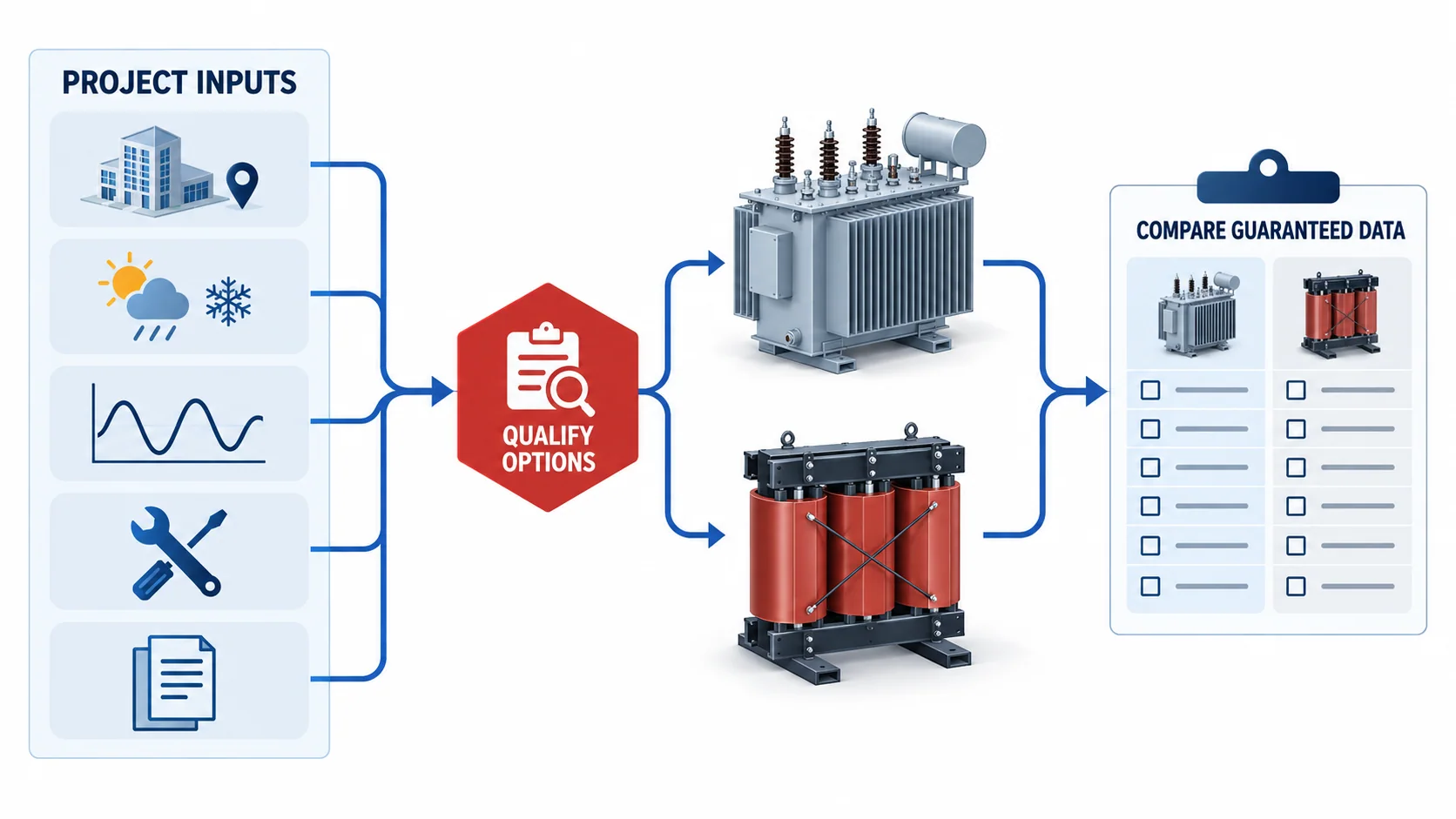
Notice that the matrix does not declare a winner. Its purpose is to eliminate unsuitable or poorly documented offers before price comparison.
What information should accompany a transformer inquiry?
For a meaningful recommendation, send more than the required kVA. The minimum package should identify:
- primary and secondary voltage, frequency, phase arrangement and system earthing;
- required capacity, load schedule, future growth and redundancy plan;
- installation location, room or outdoor layout and access constraints;
- ambient temperature, altitude and environmental conditions;
- required standards, utility rules and project specifications;
- preferred or prohibited fluids and any fire or environmental constraints;
- connection, tap, impedance, protection, monitoring and communication requirements;
- loss-evaluation method, sound limit and required tests;
- delivery destination, transport limits, schedule and documentation scope.
For the full input checklist, see what to prepare before requesting a power transformer quotation. If the transformer is part of a wider factory or process-power package, the industrial power distribution guide can help define adjacent switchgear and system interfaces.
Where CANGO fits into the comparison
CANGO’s power transformer range includes the S11-M oil-immersed distribution-transformer family and several dry-type families, including SC(B), SG(B) and amorphous-alloy SCBH designs. A product family name is only the beginning of the selection: the offered model, rating, enclosure, accessories, losses, tests and documents must match the project specification.
The strongest request is not “quote an oil transformer” or “quote a dry transformer.” It is: “Review these two construction options against the attached electrical duty, site conditions and scope, identify deviations, and provide guaranteed data on the same schedule.” That gives engineering and procurement teams a defensible basis for selection.